10 Important Side Effects of Metoprolol You Should Know
Metoprolol is a commonly prescribed medication used to treat high blood pressure, chest pain related to heart disease, and certain heart rhythm problems. It may also be prescribed to help improve survival after a heart attack or manage specific cases of heart failure.
Like all medications, metoprolol can cause side effects. Many are mild and improve as the body adjusts to treatment, while others may require medical attention.
Knowing what to watch for can help you recognize potential problems and discuss them with your healthcare professional. However, never stop taking metoprolol suddenly without medical guidance, because doing so can worsen certain heart conditions.
What Is Metoprolol?
Metoprolol belongs to a group of medicines called beta blockers. It works by reducing the effects of certain stress hormones on the heart, helping slow the heart rate and lower blood pressure.
Doctors may prescribe it for several reasons, including:
High blood pressure
Angina, or chest pain caused by reduced blood flow to the heart
Certain irregular heart rhythms
Treatment following a heart attack
Some cases of heart failure
The dose and formulation depend on the condition being treated and the individual's medical history.
10 Possible Side Effects of Metoprolol
Not everyone experiences side effects, and the symptoms can vary from person to person.
1. Tiredness and Low Energy
Feeling unusually tired is a recognized side effect of metoprolol. Because the medication slows the heart rate, some people notice reduced energy, particularly when starting treatment or after a dose change.
If tiredness is severe, persistent, or interferes with daily activities, contact your healthcare professional. Do not change your dose on your own.
2. Dizziness or Lightheadedness
Metoprolol can lower blood pressure and slow the heart rate, which may cause dizziness or lightheadedness.
These symptoms may be more noticeable when standing up quickly. Move slowly from sitting to standing, and sit or lie down if you feel faint.
Seek medical advice if dizziness continues or becomes severe, particularly if you experience fainting.
3. A Slow Heartbeat
A slower heartbeat is one of the medication's intended effects, but sometimes the heart rate becomes too slow.
Warning signs can include unusual weakness, dizziness, fainting, or feeling as though your heart is beating much more slowly than usual.
A very slow heartbeat accompanied by fainting, chest pain, confusion, or breathing difficulties requires urgent medical assessment.
4. Cold Hands and Feet
Some people taking metoprolol notice that their hands or feet feel colder than usual. Beta blockers can affect circulation in the extremities.
Keep your hands and feet comfortably warm, and mention persistent symptoms to your healthcare professional. Sudden severe pain, marked color changes, or a cold, pale limb should be assessed urgently.
5. Nausea or Stomach Discomfort
Metoprolol may cause nausea, stomach discomfort, diarrhea, or other digestive symptoms.
Taking the medication according to the instructions provided by your prescriber or pharmacist may help. Do not crush or alter an extended-release formulation unless the product instructions specifically allow it.
Contact your healthcare professional if digestive symptoms persist, become severe, or prevent you from taking your medication as prescribed.
6. Shortness of Breath
Shortness of breath can have several causes, including heart or lung conditions. In some circumstances, metoprolol may contribute to breathing difficulties, particularly in susceptible individuals.
New or worsening breathlessness should not be ignored, especially if it occurs with chest discomfort, wheezing, faintness, or swelling of the legs.
Severe breathing difficulty or chest pain requires emergency medical attention.
7. Sleep Disturbances
Some people report sleep problems, unusual dreams, or nightmares while taking beta blockers, including metoprolol.
If sleep disturbances begin after starting treatment and continue, discuss them with your healthcare professional. They can help determine whether the medication may be contributing and whether an adjustment is appropriate.
Do not change the timing or dose without checking the instructions for your particular formulation.
8. Low Blood Pressure
Metoprolol can lower blood pressure. For some people, the effect may be accompanied by weakness, blurred vision, dizziness, or fainting.
If you monitor your blood pressure at home, record your readings and any symptoms to share with your clinician.
Do not try to correct symptoms by changing your medication dose yourself. Seek urgent care if you faint or develop severe weakness, confusion, or chest pain.
9. Changes in Blood Sugar Warning Signs
Metoprolol can make some warning signs of low blood sugar, particularly a fast heartbeat, less noticeable. This is especially relevant for people with diabetes who use insulin or other medicines that can lower blood glucose.
If you have diabetes, ask your healthcare professional how to monitor your blood sugar and recognize low blood sugar when taking a beta blocker.
Do not assume that the absence of a racing heartbeat means your blood sugar is normal.
10. Swelling or Worsening Heart Symptoms
Swelling in the feet, ankles, or legs can have many causes. In someone taking metoprolol, new swelling accompanied by breathlessness, unusual fatigue, or rapid weight gain needs medical assessment because it may indicate a worsening heart problem.
Swelling is not specific to metoprolol, and it should not automatically be attributed to the medication without evaluating other possible causes.
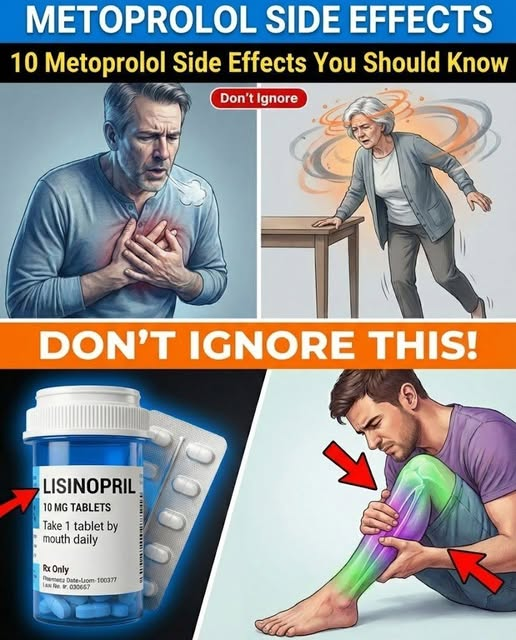
Important image clarification: The medicine bottle shown in the accompanying image is labeled amlodipine 5 mg, not metoprolol. Amlodipine is a different medication, and ankle or leg swelling is a recognized side effect of amlodipine. The two medicines should not be confused.
When Should You Seek Medical Help?
Contact a healthcare professional if side effects are persistent, severe, or interfere with everyday activities.
Seek emergency medical care for symptoms such as:
Severe or sudden difficulty breathing
New or persistent chest pain
Fainting accompanied by other concerning symptoms
Severe weakness with a very slow heartbeat
Signs of a serious allergic reaction, such as swelling of the tongue or throat or difficulty breathing
These symptoms can have different causes, but they need prompt assessment.
Can You Stop Taking Metoprolol if You Experience Side Effects?
Do not stop metoprolol suddenly without consulting your prescriber. Abrupt withdrawal can worsen angina and other heart conditions and may increase the risk of serious complications.
If you are experiencing side effects, your clinician can assess whether they are related to the medicine and decide whether a dose adjustment, alternative treatment, or additional investigation is appropriate.
Never take an extra dose to make up for a missed dose unless your medication instructions specifically direct you to do so.
What About the Swollen Ankles Shown in the Picture?
The image may lead readers to think that ankle swelling is a specific warning sign of metoprolol. In reality, swelling can result from several causes, including circulation problems, heart conditions, and certain medications.
Amlodipine, the drug actually shown on the bottle, commonly causes swelling around the ankles and feet. That does not mean every person who takes amlodipine will experience it, nor does swelling automatically mean someone has heart failure.
Persistent or worsening swelling should be discussed with a healthcare professional, especially if it is accompanied by shortness of breath or rapid weight gain.
Frequently Asked Questions
1. What are the most common side effects of metoprolol?
Commonly reported effects include tiredness, dizziness, headache, nausea, and a slower heartbeat. Some people also experience cold hands or feet.
2. Can metoprolol cause swollen ankles?
Swelling can occur in people taking metoprolol, but it can also indicate another condition. Amlodipine is particularly associated with ankle and foot swelling. New swelling should be evaluated rather than automatically blamed on a particular medicine.
3. Is metoprolol safe for long-term use?
Metoprolol is prescribed for long-term treatment when clinically appropriate. Its benefits and risks depend on the person's condition, dose, and medical history. Regular follow-up helps ensure that the treatment remains suitable.
4. Should I stop taking metoprolol if I feel dizzy?
Do not stop it suddenly on your own. Sit or lie down if you feel dizzy, avoid driving while symptomatic, and contact your healthcare professional for advice. Seek urgent care for fainting, chest pain, or severe symptoms.
5. Can metoprolol affect people with diabetes?
Yes. It may mask some warning signs of low blood sugar, especially a fast heartbeat. People with diabetes should discuss blood glucose monitoring and medication safety with their healthcare team.
Final Thoughts
Metoprolol can be an important treatment for high blood pressure and several heart conditions. Although side effects are possible, many people take it under medical supervision without experiencing serious problems.
Understanding the potential side effects helps you know when to seek advice, but it is equally important not to discontinue treatment abruptly.
Finally, remember that the bottle shown in the accompanying image contains amlodipine, not metoprolol. Because these are different medicines with different side-effect profiles, the image should be replaced or corrected before publication to avoid confusing readers.