A “mini stroke” is commonly called a transient ischemic attack (TIA). It happens when blood flow to part of the brain is temporarily interrupted. The symptoms may disappear within minutes or hours, but that does not make a TIA harmless—it can be an important warning sign for a future stroke.
Because it is impossible to know at home whether symptoms are caused by a TIA or a full stroke, sudden stroke-like symptoms should be treated as a medical emergency even if they disappear.
1. Sudden Weakness or Numbness on One Side
One of the most recognizable warning signs is sudden weakness or numbness affecting the face, arm or leg, particularly on one side of the body.
A person may suddenly be unable to raise one arm normally, or one side of the face may droop.
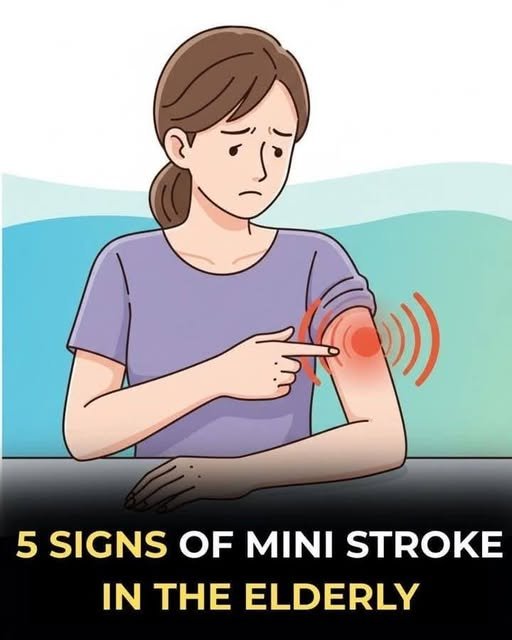
Importantly, the arm discomfort shown in the viral image is not by itself a reliable sign of a TIA. The key warning sign is sudden neurological weakness or numbness rather than ordinary arm or joint pain.
2. Sudden Trouble Speaking or Understanding
A person experiencing a TIA or stroke may suddenly:
Slur their words
Use unusual or incorrect words
Have difficulty forming sentences
Struggle to understand what someone else is saying
This can appear abruptly, even in someone who was speaking normally moments earlier.
3. Sudden Vision Problems
Another warning sign is a sudden change in vision.
This can include loss of vision, blurred vision or double vision in one or both eyes. A sudden unexplained visual disturbance should not simply be attributed to getting older.
4. Sudden Difficulty Walking or Loss of Balance
A TIA can affect coordination and balance.
Someone may suddenly become unusually unsteady, dizzy or unable to walk normally. They might stumble or need support despite having been walking normally beforehand.
The important word is sudden. Chronic balance difficulties can have many causes, whereas an abrupt neurological change requires urgent assessment.
5. Sudden Confusion
A person may suddenly appear confused or have difficulty understanding familiar information.
They might seem unable to follow a simple conversation or suddenly struggle with something that would normally be easy for them.
These abrupt changes should not automatically be dismissed as normal aging.
Remember F.A.S.T.
An easy way to remember several major stroke warning signs is F.A.S.T.:
F — Face: Ask the person to smile. Does one side droop? A — Arms: Ask them to raise both arms. Does one drift downward? S — Speech: Is their speech slurred or unusual? T — Time: If any of these signs appear, seek emergency medical help immediately.
Stroke organizations emphasize that rapid treatment matters because delays can affect treatment options and outcomes. Mayo Clinic
What Makes a “Mini Stroke” Different?
TIA symptoms are temporary, but that’s exactly what can make them dangerous to dismiss.
Someone may feel normal again and assume nothing serious happened. However, a TIA can indicate an underlying problem affecting blood flow to the brain and requires prompt medical assessment.
Doctors may investigate possible causes such as narrowing of arteries supplying the brain or abnormal heart rhythms. Carotid artery disease, for example, can restrict blood flow to the brain and contribute to stroke risk. Mayo Clinic
Don’t Wait for the Symptoms to Return
If someone suddenly develops facial drooping, one-sided weakness or numbness, speech difficulty, vision changes, confusion, or major problems with balance or coordination, call local emergency medical services immediately.
Don’t wait to see whether the symptoms disappear, and don’t try to determine at home whether it’s “only” a mini stroke.
The Bottom Line
The five warning signs to remember are sudden one-sided weakness or numbness, difficulty speaking or understanding, vision changes, problems walking or balancing, and sudden confusion.
A TIA may be temporary, but the warning it provides should be taken seriously. Even symptoms that completely disappear warrant urgent medical evaluation.
Knowing these warning signs could help someone recognize an emergency sooner—share this information with someone who should know them.