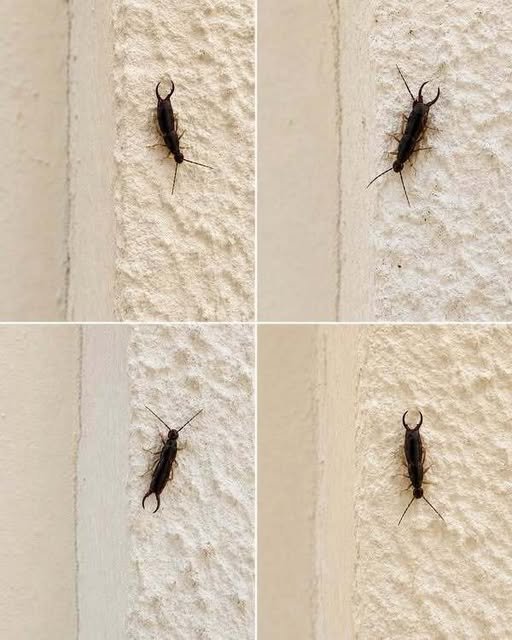
If you’ve ever walked into a bathroom, basement, kitchen or another dark area and spotted a strange insect with curved pincers on the end of its body, you may have encountered an earwig.
The insects shown in the viral image appear to be earwigs. Their distinctive forceps-like appendages are one of their easiest identifying features. Despite their frightening appearance, earwigs are generally harmless to people and are considered more of a household nuisance than a dangerous pest. Extension de l’Université du Minnesota
What Is an Earwig?
Earwigs are small, flattened insects with long antennae and a pair of curved structures called cerci at the end of their abdomen.
Those pincers look intimidating, but they are mainly used for defense and handling food or prey. Earwigs do not crawl into people’s ears, despite the old superstition that gave them their name. Penn State Extension
Why Are Earwigs Coming Into Your House?
Finding an earwig indoors doesn’t necessarily mean your home is dirty.
These insects prefer dark, damp and confined areas. They can enter buildings through cracks, gaps around doors and windows, foundations and other openings. Extension de l’Université du Minnesota
If you’re suddenly seeing several of them, it’s worth checking for conditions that make the area attractive to them.
1. Excess Moisture
Moisture is one of the biggest things to investigate.
Earwigs often hide beneath leaves, plant debris, boards, mulch and other objects that provide darkness and moisture.
Keeping these materials away from the immediate foundation of your home can make the area less attractive to them. Extension de l’Université du Minnesota
Are Earwigs Dangerous?
Usually, no.
According to University of Minnesota Extension, earwigs do not damage people, property or food and are primarily considered a nuisance when they enter homes. Extension de l’Université du Minnesota
Their pincers can look alarming, but they are not capable of causing the kind of serious injury that viral posts sometimes imply.
Does Finding Earwigs Mean Your House Has Mold?
Not necessarily.
Seeing an earwig does not prove that your home has mold or a serious moisture problem.
However, because earwigs prefer damp environments, finding many of them can be a useful reason to inspect the home and surrounding property for unnecessary moisture, leaks or drainage problems. Extension de l’Université du Minnesota
How to Reduce Earwigs Around Your Home
You don’t necessarily need to reach for insecticide immediately.
Try these simple measures first:
Keep the Area Dry
Fix plumbing leaks, improve drainage and avoid unnecessary water accumulation near the house.
Remove Hiding Places
Clear away piles of leaves, grass clippings, boards, excessive mulch and other debris close to the foundation.
Seal Entry Points
Caulk visible cracks and gaps around doors, windows, foundations and utility openings.
A large number of earwigs may indicate that the surrounding environment is providing plenty of moisture and shelter.
Rather than focusing only on killing the insects you see, look for the conditions attracting them.
Check the outside perimeter of the house, especially after rain, and inspect damp areas, vegetation, mulch, wood piles and drainage.
The Bottom Line
The insects in the picture appear to be earwigs, recognizable by the pincers at the end of their bodies.
Finding one in your home isn’t usually a reason to panic. But if you’re seeing them repeatedly, check for excess moisture, outdoor debris and cracks or gaps that could provide an entrance. Extension de l’Université du Minnesota
And despite the creepy appearance, there’s no need to believe the old myth that earwigs are trying to crawl into your ears.
Have you ever found one of these insects inside your home? Tell us where you found it in the comments 👇