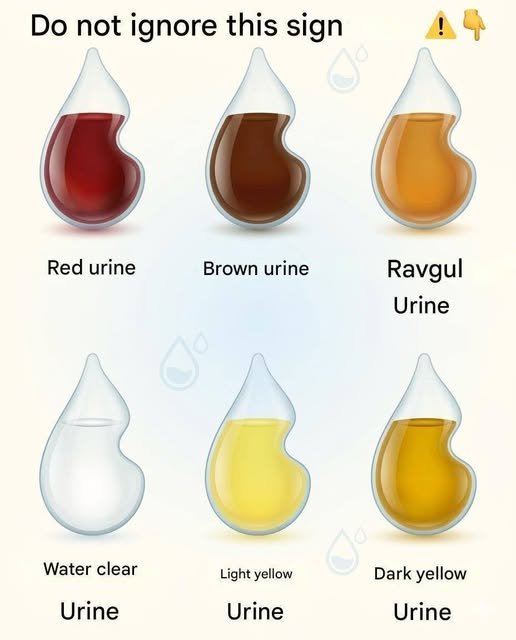
What Does the Color of Your Urine Say About Your Health?
Your urine can change color throughout the day. Sometimes the change is completely normal and simply reflects how much fluid you’ve had. Other times, an unusual color can be related to food, medication, dehydration, or a medical condition.
The important thing to remember is that urine color alone cannot diagnose a disease. Persistent or unexplained changes should be evaluated by a healthcare professional. Mayo Clinic
1. Clear Urine
Very clear urine usually means your urine is highly diluted, often because you’ve been drinking plenty of fluids.
Occasional clear urine is generally not concerning. However, consistently producing very clear urine together with excessive thirst or frequent urination may be worth discussing with a healthcare professional.
People with certain conditions, including kidney or heart failure, may also have specific fluid-intake recommendations, so simply drinking more water isn’t appropriate for everyone. NIDDK
2. Light Yellow Urine
Light or pale yellow urine is generally considered normal.
Its color comes partly from natural pigments in urine, and drinking fluids dilutes those pigments. NIDDK notes that urine should generally be pale yellow when you’re drinking enough fluids. NIDDK
This is usually the color you want to see.
3. Dark Yellow Urine
Dark yellow urine is often a sign that the urine is more concentrated, commonly because you’re not getting enough fluids.
It can happen after:
Exercise
Sweating
Hot weather
Sleeping overnight
Going several hours without drinking
If the urine becomes lighter after you rehydrate, that’s generally reassuring. Mayo Clinic
4. Orange Urine
Orange urine can have several causes.
It may result from:
Dehydration
Certain medications
Some vitamins
Food dyes
However, persistent orange urine can sometimes be associated with liver or bile-duct problems, particularly when accompanied by yellow skin or eyes or unusually pale stools. Mayo Clinic
5. Red or Pink Urine
Red or pink urine doesn’t automatically mean something serious.
Foods such as beets, blackberries and rhubarb can change urine to pink or red. Certain medicines can do the same.
But red or pink urine can also indicate blood in the urine. Possible causes include urinary infections, kidney stones, prostate problems and other urinary-tract conditions. Mayo Clinic
Unexplained blood in the urine should be medically evaluated, even when there is no pain.
6. Brown or Cola-Colored Urine
Brown urine deserves more attention, particularly when there is no obvious food or medication explanation.
Possible causes include:
Significant dehydration
Certain medications
Liver disorders
Kidney disorders
Urinary-tract problems
Severe muscle injury after extreme exercise
Tea- or cola-colored urine after intense exercise can occur with muscle breakdown, which can potentially damage the kidneys. Mayo Clinic
What About Cloudy Urine?
Cloudiness isn’t really a color, but it can also provide useful information.
Cloudy or murky urine can occur with urinary tract infections or kidney stones. A urine test can help determine the cause. Mayo Clinic
Don’t Forget Medications and Food
An unusual urine color isn’t always a sign of illness.
Foods, food dyes, vitamins and medications can all change urine color. For example, beets can make urine reddish, while some medications can produce orange, greenish-blue or brown urine. Mayo Clinic
That’s why it’s useful to consider what you’ve eaten and which medicines or supplements you’ve recently taken before assuming the worst.
When Should You See a Doctor?
Don’t ignore a persistent or unexplained change, especially if you have:
Red or bloody urine
Dark brown or cola-colored urine
Persistent orange urine
Pain or burning when urinating
Fever or chills
Back, side or abdominal pain
Reduced urine output
Yellowing of the skin or eyes
Persistent cloudy urine
A healthcare professional may perform a urinalysis, and blood tests may be used to assess kidney function or investigate possible liver problems. Mayo Clinic
A Simple Urine Color Guide
Color
Possible explanation
Clear
Very diluted urine
Pale yellow
Usually normal
Dark yellow
Often concentrated/dehydration
Orange
Dehydration, medications, vitamins or sometimes liver/bile problems
Pink/red
Food, medication or possible blood
Brown/cola
Dehydration, medications, liver/kidney problems or muscle injury
Cloudy
Possible infection, stones or other causes
The Bottom Line
Your urine can provide clues, but it shouldn’t be used as a diagnosis.
Pale yellow is generally normal, while darker yellow often reflects concentrated urine. Red, brown or orange urine can have harmless explanations, but persistent or unexplained changes deserve attention.Mayo Clinic
And remember: red urine should never automatically be dismissed as dehydration, particularly when there is no obvious food or medication explanation.
Have you ever noticed your urine changing color after certain foods, medications or exercise? Tell us in the comments 👇