High cholesterol is often called a silent condition because most people with elevated cholesterol feel completely normal. There usually isn’t a headache, tiredness, or particular sensation that tells you your cholesterol is high.
The only reliable way to know your cholesterol level is a blood test called a lipid panel. CDC
However, in people with very high cholesterol—especially inherited familial hypercholesterolemia (FH)—certain physical signs can occasionally appear.
Here are five that are worth knowing.
1. Yellowish Deposits Around the Eyes
Small yellowish patches or raised deposits around the eyelids are called xanthelasma.
They can be associated with abnormal cholesterol levels, although having them does not automatically mean that your cholesterol is high. They can have other causes as well.
If you notice new yellowish deposits around your eyes, discussing them with a healthcare professional and checking your cholesterol can be reasonable.
2. Yellowish Bumps on the Skin
Xanthomas are cholesterol-rich deposits that can appear as yellowish bumps in the skin.
They are more strongly associated with very high cholesterol levels and certain inherited lipid disorders. CDC
They may occur around areas such as the elbows, hands or other parts of the body.
3. Cholesterol Deposits in the Tendons
People with familial hypercholesterolemia can develop cholesterol deposits in tendons, particularly the Achilles tendons and tendons of the hands or elbows.
The deposits can cause the tendons to become noticeably thickened. www.heart.org
This is particularly important when there is also a family history of very high cholesterol or early heart disease.
4. A White, Gray or Yellow Ring Around the Cornea
A ring around the outer edge of the cornea is called corneal arcus.
In older adults, this can occur as part of normal aging and does not necessarily indicate high cholesterol. However, when similar findings occur at a young age—particularly alongside extremely high LDL cholesterol—they can be associated with familial hypercholesterolemia. www.heart.org
So the ring should not be interpreted by itself as proof of high cholesterol.
5. Chest Pain or Other Cardiovascular Symptoms
This one needs an important clarification.
Chest pain is not a symptom of high cholesterol itself. Rather, long-term elevated LDL cholesterol can contribute to plaque buildup in the arteries, increasing the risk of coronary artery disease, heart attack and stroke. CDC
If someone develops sudden chest pressure, severe shortness of breath, sweating or other possible heart-attack symptoms, they should seek emergency medical care.
The Biggest Myth About High Cholesterol
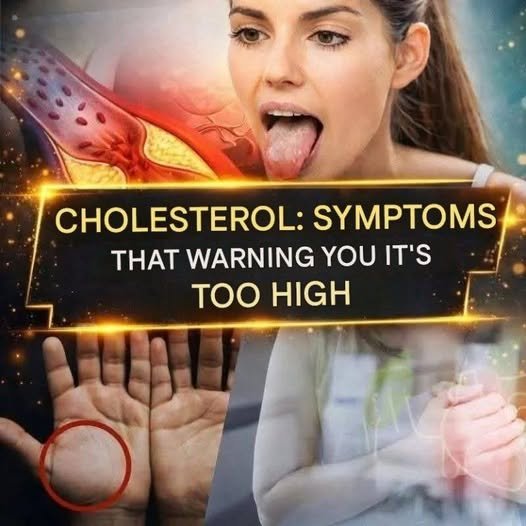
Many viral posts show a person with a particular physical symptom and claim:
“Your body is warning you that your cholesterol is too high.”
That’s usually misleading.
Most people with high cholesterol have no visible symptoms at all. The CDC specifically states that there are usually no warning signs and that a blood test is needed to determine whether cholesterol is elevated. CDC
That’s why waiting for symptoms isn’t a good way to monitor cholesterol.
What Test Checks Your Cholesterol?
A healthcare professional can order a lipid panel, which generally measures:
LDL cholesterol
HDL cholesterol
Triglycerides
Total cholesterol
The appropriate LDL goal isn’t identical for everyone. It depends on factors such as age, overall health, diabetes, previous cardiovascular disease and other risk factors. www.heart.org
What If High Cholesterol Runs in Your Family?
This is especially important.
Familial hypercholesterolemia (FH) is an inherited condition that can cause very high LDL cholesterol from an early age. People with FH have an increased risk of premature heart disease and stroke if it isn’t identified and treated. www.heart.org
If a close family member has very high cholesterol or experienced heart disease unusually early in life, tell your healthcare professional. Family members may also need cholesterol screening.
Can You Feel High Cholesterol?
Usually, no.
You can have significantly elevated LDL cholesterol while feeling completely healthy.
That’s why a person shouldn’t assume that their cholesterol is normal simply because they have no symptoms.
The Bottom Line
The viral claim that there are five obvious symptoms that tell you your cholesterol is too high is misleading.
Most high cholesterol causes no symptoms. However, physical findings such as xanthelasma, xanthomas, thickened Achilles tendons or certain corneal changes can sometimes occur, particularly with very high or inherited cholesterol disorders. www.heart.org
The most reliable way to know your cholesterol level is simple: get a lipid blood test.
When was the last time you had your cholesterol checked? Tell us in the comments 👇