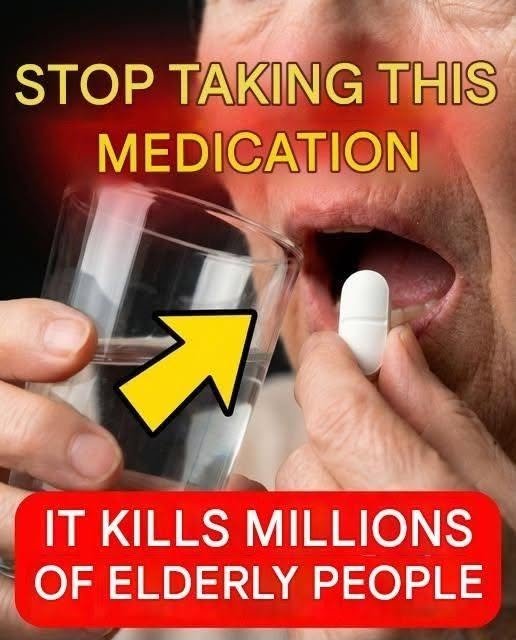
A viral image warns older adults to “stop taking this medication” because it supposedly “kills millions” of elderly people. Another version claims that a cardiologist has identified five medications that increase the risk of heart attack and stroke.
That message is far too broad.
Some medications can raise blood pressure, increase cardiovascular risk, worsen heart failure, increase bleeding risk, or interact with other medicines. But that does not mean they are dangerous for everyone, and it certainly does not mean people should suddenly stop prescribed treatment.
Older adults are also more vulnerable to medication interactions because aging can change how the liver and kidneys process medicines. U.S. Food and Drug Administration
Here are five medication groups that deserve particular attention.
1. NSAID Painkillers
Nonsteroidal anti-inflammatory drugs, commonly called NSAIDs, include medicines such as:
Ibuprofen
Naproxen
Diclofenac
Celecoxib
These medications can be useful for pain and inflammation, but the FDA warns that non-aspirin NSAIDs can increase the risk of heart attack and stroke. The risk can occur relatively early in treatment and may increase with higher doses or longer use. FDA Access Data
NSAIDs can also cause gastrointestinal bleeding and may raise blood pressure.
This is particularly important for someone who already has cardiovascular disease, high blood pressure, kidney problems or is taking blood-thinning medication.
Important: Occasional use isn’t automatically dangerous, and the appropriate choice depends on the individual.
2. Decongestants Found in Some Cold Medicines
Some cold and allergy products contain decongestants such as pseudoephedrine or phenylephrine.
These medicines work partly by constricting blood vessels, which can raise blood pressure. The American Heart Association advises people with heart disease or high blood pressure to be particularly cautious with decongestants. www.heart.org
The issue is especially easy to miss because someone may think they’re simply taking an ordinary cold remedy.
Tip: Check the active ingredients on combination cold medicines instead of assuming they’re harmless.
3. Certain Antipsychotic Medications in Older Adults With Dementia
This category requires important context.
The American Geriatrics Society’s Beers Criteria states that antipsychotics are associated with an increased risk of stroke and greater cognitive decline and mortality in people with dementia, and generally recommends avoiding them for behavioral symptoms of dementia unless specific circumstances justify their use. PubMed Central (PMC)
That does not mean every person taking an antipsychotic should stop.
These medicines can have legitimate indications, and abruptly discontinuing a psychiatric medication can itself cause problems.
The decision should be made with the prescribing clinician.
4. Aspirin When Used to Prevent a First Heart Attack or Stroke
Aspirin is an interesting example because the viral claim can easily become misleading.
Aspirin can reduce the risk of heart attack and certain strokes in people with established cardiovascular disease, which is why many patients are prescribed it.
But for some older adults who have never had cardiovascular disease, starting daily aspirin for primary prevention can cause more harm than benefit because of bleeding risk. The American Geriatrics Society recommends avoiding initiation of aspirin for primary prevention in older adults, while the FDA emphasizes that aspirin decisions should be individualized. PubMed Central (PMC)
The American Heart Association also notes that for adults over 70, aspirin to prevent a first heart attack or stroke may do more harm than good. www.heart.org
So the important question isn’t simply:
“Do you take aspirin?”
It’s:
“Why were you prescribed aspirin?”
Someone taking it after a previous heart attack or certain stroke may have a very different risk-benefit calculation.
5. Systemic Corticosteroids
Medications such as prednisone and methylprednisolone can be extremely useful for inflammatory and autoimmune conditions.
However, they can also raise blood pressure and affect blood glucose. The American Heart Association lists systemic corticosteroids among medicines that can raise blood pressure. www.heart.org
Long-term or repeated corticosteroid treatment can therefore require careful monitoring, particularly in people who already have cardiovascular risk factors.
Again, this does not mean corticosteroids should simply be stopped.
Why Older Adults Need Extra Medication Reviews
Taking several medications at the same time—sometimes called polypharmacy—can make interactions and side effects more complicated.
The FDA explains that aging-related changes in the liver, kidneys, circulation and body composition can change how medications are processed and eliminated. U.S. Food and Drug Administration
That’s why a medication that was appropriate several years ago may deserve a review after a person’s health, kidney function, other medicines or risk factors change.
Never Stop a Prescription Suddenly
This is the most important message missing from many viral medication posts.
Do not stop a prescription medication simply because you saw a warning on social media.
Some medications can cause serious problems if discontinued suddenly, while others may be protecting you from heart attack, stroke or other complications.
Instead, ask your doctor or pharmacist:
Why am I taking this medication?
Do I still need it?
Is the dose appropriate for my age and health?
Could it interact with another medication I’m taking?
Is there a safer alternative for my situation?
Should my blood pressure, kidney function or other measurements be monitored?
The FDA specifically recommends discussing medication questions with healthcare professionals, particularly as people age and medication regimens become more complicated. U.S. Food and Drug Administration
The Bottom Line
The viral statement that a medication “kills millions of elderly people” is not a reliable way to understand medication safety.
There are medications and medication combinations that can increase cardiovascular risks or create serious problems for certain older adults. NSAIDs, some decongestants, certain antipsychotics in people with dementia, aspirin used for primary prevention, and systemic corticosteroids are examples where the risks and benefits may deserve careful review.
But the same medication can be appropriate and beneficial for one person while being inappropriate for another.
The safest approach isn’t to stop medications based on a viral post—it’s to have your complete medication list reviewed regularly by a doctor or pharmacist.
Do you regularly review all of your medications with your doctor or pharmacist? Tell us in the comments. 👇