Have you ever noticed tiny scratches on your glasses that make it harder to see clearly? Even a few small marks can be frustrating, especially when your glasses are something you rely on every day.
You may have seen online videos recommending toothpaste, baking soda, or homemade cleaning mixtures to remove scratches and restore lenses to their original shine. However, not every popular trick is safe, and some can make damaged lenses even worse.
The good news is that there are simple ways to clean your glasses properly, reduce the appearance of smudges, and determine what to do when scratches are already present.
Can You Really Remove Scratches From Glasses?
The answer depends on the type of damage.
Ordinary dirt, grease, and fingerprints can often be removed with proper cleaning. Actual scratches, however, generally cannot be safely removed at home.
Most modern eyeglass lenses are made from plastic materials or specialized optical materials and may have additional coatings, such as anti-reflective or scratch-resistant layers.
Trying to polish these surfaces with abrasive substances can damage the coatings, create cloudy patches, or affect the optical quality of the lenses.
Before trying any remedy, determine whether you are dealing with a surface smudge or a genuine scratch.
The Safest Way to Clean Your Glasses
If your glasses look cloudy or have marks on the lenses, begin with this simple cleaning routine.
What You Need
Clean, lukewarm water
A small drop of lotion-free dishwashing liquid
A clean microfiber lens cloth
Step-by-Step Instructions
Step 1: Rinse the lenses.
Hold your glasses under gently running lukewarm water to remove loose dust and particles. This helps reduce the risk of rubbing abrasive debris across the lenses.
Step 2: Apply a small drop of dishwashing liquid.
Use a gentle, lotion-free dishwashing liquid suitable for cleaning the lenses. Avoid products containing abrasive particles or harsh additives.
Step 3: Clean gently.
Use your fingertips to spread the cleaning solution over both sides of the lenses and around the nose pads and frame.
Step 4: Rinse thoroughly.
Wash away all remaining soap with lukewarm water.
Step 5: Dry with microfiber.
Gently dry your glasses with a clean microfiber cloth designed for eyeglasses.
After cleaning, check the lenses under good lighting. If the marks disappear, they were likely caused by dirt, grease, or residue rather than permanent scratches.
Why You Should Avoid Toothpaste on Glasses
Toothpaste is frequently recommended online as a homemade scratch remover. However, it is not designed for optical lenses.
Many toothpastes contain polishing agents or abrasive particles. Rubbing them against eyeglass lenses may damage protective coatings or leave the surface cloudy.
Even toothpaste labeled as gentle or whitening-free is not a reliable solution for repairing scratched lenses.
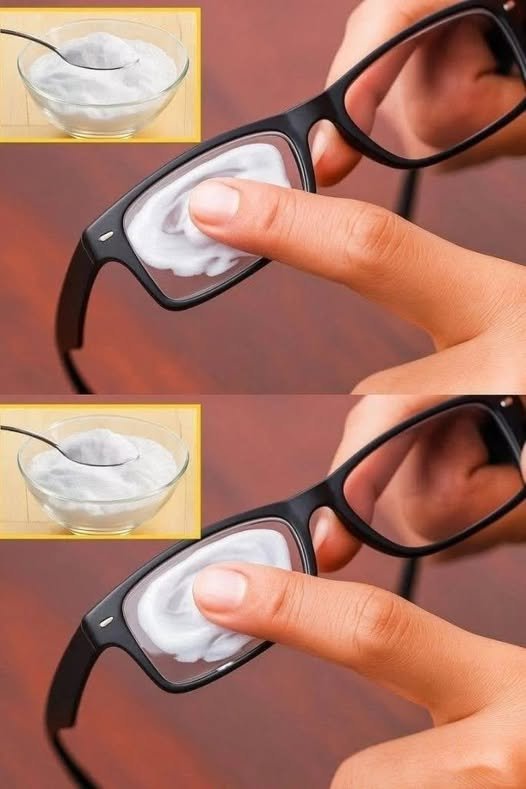
For the same reason, avoid using baking soda, scouring powders, abrasive sponges, or household polishing compounds.
Does Baking Soda Remove Scratches From Glasses?
Baking soda is useful for certain household cleaning tasks, but that does not make it suitable for optical surfaces.
Its abrasive action can damage lens coatings when rubbed against them. It may also leave residue that makes lenses appear cloudy.
Rather than experimenting with homemade polishing mixtures, use a lens-cleaning product recommended by your optician.
What About Car Wax, Furniture Polish, or Other Household Products?
Some online tips suggest filling scratches with wax or applying household polish to make lenses appear smoother.
These methods are not recommended for eyeglasses. They can leave films, interfere with coatings, or produce uneven optical surfaces.
Products designed for cars, furniture, or other household materials should not be assumed safe for prescription lenses.
What Should You Do if Your Glasses Are Actually Scratched?
If cleaning does not remove the marks, consider these options.
1. Ask an Optician to Inspect the Lenses
An optician can help determine whether the problem is a scratch, damaged coating, or another type of surface deterioration.
2. Check Whether the Lenses Need Replacing
If the scratches interfere with your vision, create distracting reflections, or sit directly in your line of sight, replacing the lenses may be the most appropriate option.
Depending on the condition of the glasses, you may not need to replace the entire frame.
3. Check Your Warranty
Some glasses come with warranties or protection plans covering certain types of lens damage. Review the terms or contact the retailer where you purchased them.
4. Protect Your Glasses From Future Damage
A few simple habits can help keep your lenses in better condition:
Store your glasses in a protective case when not wearing them.
Use a clean microfiber cloth rather than clothing or paper towels.
Avoid placing the lenses face down on a table.
Keep your glasses away from excessive heat, including hot dashboards.
Use cleaning products specifically intended for eyeglasses.
How to Tell Whether Your Lenses Are Scratched or Just Dirty
Sometimes, what looks like a scratch is actually a buildup of oil, dust, dried cleaning solution, or other residue.
Clean the glasses thoroughly using the method described above.
If the marks disappear, the issue was probably surface contamination.
If the marks remain in the same place after cleaning, the lenses may be scratched or their coatings may be damaged. An optician can help distinguish between the two.
Do not try to scrape the marks away with a fingernail or sharp object.
Frequently Asked Questions
Can toothpaste make scratched glasses look new again?
Toothpaste is not a safe or reliable method for removing scratches from eyeglass lenses. Abrasive ingredients may damage coatings and make the lenses look worse.
Can vinegar remove scratches from glasses?
Vinegar does not repair scratches in optical lenses. It is better to use a cleaning method or product recommended for your specific lenses.
Can I use a paper towel to clean my glasses?
It is better to use a clean microfiber lens cloth. Paper products may contain fibers or particles that can contribute to scratching, especially when the lenses have dust on them.
Why do my glasses look cloudy even after cleaning?
Cloudiness can result from residue, damaged coatings, or scratches. If proper cleaning does not help, ask an optician to inspect the lenses.
Is it safe to keep wearing scratched glasses?
Minor scratches may be mainly cosmetic, but scratches that interfere with vision can make everyday activities more difficult. If your vision is distorted or your glasses no longer provide clear vision, arrange an assessment with an optician or eye-care professional.
Final Thoughts
Finding scratches on your glasses can be disappointing, especially when you want to keep them looking clean and clear.
Before trying a homemade remedy, remember that cleaning and scratch removal are two different things. Lukewarm water, a small amount of suitable dishwashing liquid, and a clean microfiber cloth can remove many common marks, but genuine scratches generally require professional assessment or lens replacement.
Avoid toothpaste, baking soda, and abrasive household products. Protecting your lenses from damage is usually easier and safer than attempting to repair scratches afterward.
Have you ever tried a homemade trick to clean your glasses? Share your experience in the comments, and let us know what worked for you!