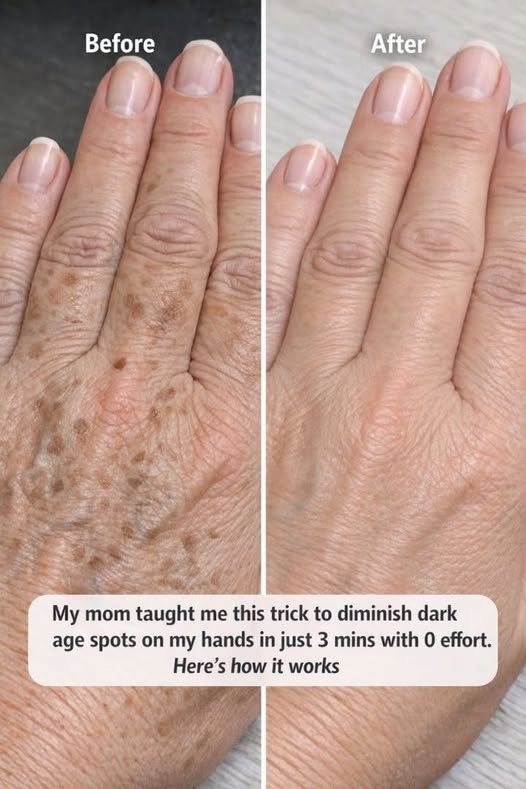
Have you noticed small brown spots appearing on the backs of your hands over time? These spots are common, especially as we get older, and years of sun exposure can make them more noticeable.
You may have seen online posts promising a simple three-minute trick to make dark spots disappear. While these claims can sound tempting, real changes in skin pigmentation generally take longer than a few minutes.
The good news is that there are practical ways to care for your hands, protect your skin, and gradually improve the appearance of some types of discoloration.
In this article, we’ll explore what causes age spots, which skincare ingredients may help, and how to build a simple hand-care routine without relying on misleading promises.
What Are Age Spots on the Hands?
Age spots, also called sunspots or solar lentigines, are flat areas of increased pigmentation that commonly develop on sun-exposed skin.
They often appear on the backs of the hands, forearms, face, and shoulders. Their color can range from light brown to dark brown, and they may become more noticeable over time.
Although these spots are often associated with aging, cumulative exposure to ultraviolet (UV) radiation is an important contributing factor.
Not every brown spot is an age spot, however. A new, changing, irregular, or bleeding spot should be evaluated by a healthcare professional rather than automatically treated as a cosmetic concern.
Can a Three-Minute Trick Remove Age Spots?
A gentle skincare routine can make hands look cleaner, smoother, and better moisturized within minutes. However, that is different from removing pigmentation.
True age spots develop when pigment accumulates in particular areas of the skin. Topical treatments that help fade this discoloration generally require consistent use over weeks or months, and results vary.
Be cautious of online claims that lemon juice, baking soda, toothpaste, or a homemade mixture can erase age spots almost instantly.
These remedies are not reliable treatments for pigmentation, and some can irritate the skin or make discoloration worse.
5 Practical Ways to Improve the Appearance of Dark Spots
1. Apply Sunscreen Every Day
Sun protection is one of the most important steps in caring for aging hands.
Choose a broad-spectrum sunscreen with SPF 30 or higher. Apply it to the backs of your hands before going outdoors and reapply approximately every two hours when outside, as well as after washing or sweating when needed.
Regular sun protection helps reduce additional UV damage and may prevent existing sunspots from becoming darker.
2. Use a Moisturizing Hand Cream
Dry skin can make wrinkles, roughness, and uneven texture more noticeable.
Look for a hand cream containing ingredients such as glycerin, ceramides, or hyaluronic acid. These ingredients help maintain skin hydration and support the skin barrier.
Apply moisturizer after washing your hands and whenever your skin feels dry.
Moisturizing can make the skin look smoother, but it does not directly remove established age spots.
3. Consider Vitamin C Skincare
Vitamin C is an antioxidant used in some skincare products to help address uneven skin tone and the appearance of discoloration.
Results depend on the formulation, concentration, consistency of use, and individual skin characteristics. Choose a product designed for topical skin use and follow its instructions.
If you have sensitive skin, introduce new products gradually and discontinue use if irritation develops.
4. Ask About Other Pigmentation Treatments
Some topical ingredients, including retinoids and other dermatologist-recommended treatments, may help improve certain forms of uneven pigmentation.
These products can cause irritation, dryness, or increased sensitivity, so the appropriate choice depends on your skin and medical history.
A dermatologist can confirm whether the spots are benign age spots and discuss suitable treatments. Professional options may include prescription creams, chemical peels, cryotherapy, or laser procedures.
Not every treatment is suitable for every person, and some procedures can cause temporary or permanent changes in skin pigmentation.
5. Avoid Harsh Home Remedies
It can be tempting to experiment with ingredients already in your kitchen, but household products are not necessarily safe for facial or hand skin.
Avoid applying undiluted lemon juice, abrasive baking soda mixtures, or harsh bleaching products to dark spots.
Irritation and inflammation can lead to additional discoloration, particularly in skin that is prone to pigmentation.
A gentle, consistent skincare routine is a safer starting point.
A Simple Daily Routine for Your Hands
You do not need an elaborate collection of products to begin caring for your skin.
In the morning:
Apply a moisturizing hand cream if needed.
Finish with broad-spectrum SPF 30 or higher sunscreen.
Reapply sunscreen during prolonged outdoor exposure.
In the evening:
Wash your hands gently.
Apply a nourishing moisturizer.
If you are using a pigmentation treatment recommended for your skin, follow its directions carefully.
Consistency matters more than trying several new remedies at once.
How Long Does It Take to See Results?
Hydration can improve the appearance of dry skin relatively quickly. However, fading established age spots generally takes longer.
Depending on the treatment, visible improvement may require several weeks or months. Some spots respond better than others, and complete removal is not guaranteed.
Take photographs in similar lighting if you want to monitor gradual changes. Avoid comparing your skin with heavily edited online before-and-after pictures.
When Should You Have a Dark Spot Checked?
Although many age spots are harmless, some skin conditions can resemble ordinary pigmentation.
Arrange a medical assessment if a spot:
Changes in size, shape, or color.
Develops an irregular border.
Bleeds, crusts, or forms a persistent sore.
Looks noticeably different from the other spots on your skin.
A healthcare professional can determine whether the spot needs further examination before any cosmetic treatment is attempted.
Frequently Asked Questions
Can age spots disappear in three minutes?
There is no established skincare method that reliably removes genuine age spots in three minutes. Moisturizing may temporarily improve the appearance of the skin, but fading pigmentation requires a different approach.
Does lemon juice lighten dark spots?
Lemon juice is not a reliable treatment for age spots. It can irritate the skin, and citrus juice on skin exposed to sunlight can cause a reaction that leads to further discoloration.
Does sunscreen help with existing age spots?
Sunscreen helps prevent additional UV damage and reduces the chance of further darkening. It does not immediately erase spots that are already present.
Can hand cream remove brown spots?
Ordinary hand cream mainly moisturizes the skin. Some specialized skincare products contain ingredients intended to improve uneven pigmentation, but results depend on the product and the cause of the discoloration.
What is the best first step for aging hands?
Daily sun protection, regular moisturizing, and avoiding harsh remedies are sensible starting points. If your spots are new or changing, have them evaluated before attempting treatment.
Final Thoughts
Dark spots on the hands are common, and their appearance can change with age and sun exposure. Although a three-minute remedy may sound appealing, genuine pigmentation does not usually disappear that quickly.
A consistent routine that combines sunscreen, moisturizer, and carefully selected skincare products can help protect your hands and improve the appearance of some forms of discoloration.
For persistent spots, a dermatologist can help identify the cause and explain which treatments are appropriate for your skin.
Have you noticed changes in the skin on your hands? Share your favorite hand-care tips in the comments!
Medical disclaimer: This article is for general educational purposes and is not a substitute for professional medical advice, diagnosis, or treatment.