I Found These Strange Brown Objects on My Slippers Next to the Bed—What Could They Be?
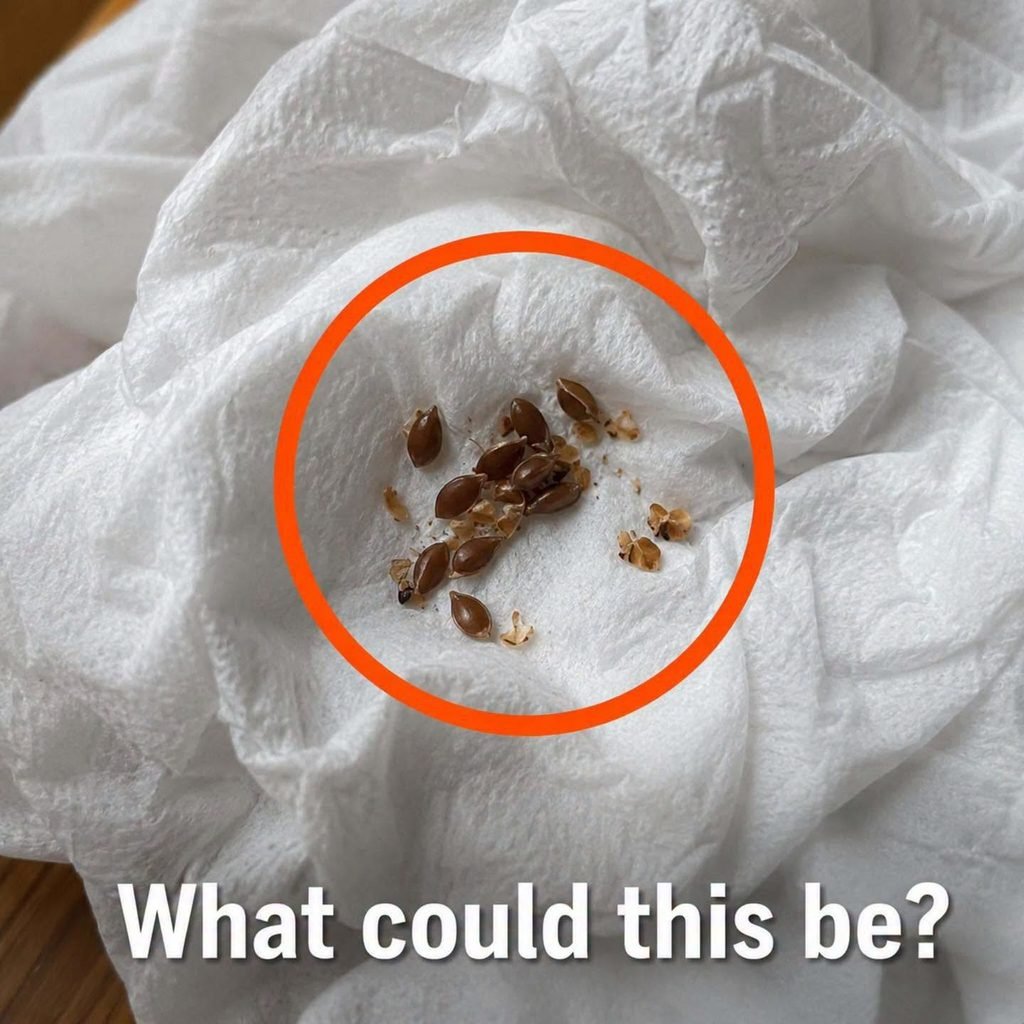
Imagine waking up in the morning, reaching for your slippers, and noticing a small cluster of strange brown objects sitting on them. At first, they look like tiny seeds. But some appear to have thin, pale shells or fragments around them, making the discovery even more puzzling.
That is exactly the kind of mystery that makes people stop and take a closer look.
Are they seeds, insect remains, or something else entirely?
The objects in this photograph have a smooth, brown, teardrop-like appearance, with lighter-colored fragments scattered around them. Although the image provides a few clues, it is not detailed enough to identify them with certainty.
Here are some possibilities worth considering and a few practical steps to help determine what you have found.
1. Could They Be Seeds or Plant Material?
One of the simplest explanations is that the objects are seeds or dried pieces of plant material.
Seeds can have glossy brown surfaces and oval or teardrop shapes. Their outer coverings may also crack or separate, leaving lighter-colored fragments nearby.
If you have recently walked outdoors, handled plants, or stored shoes near an entrance, plant material could have been transferred onto your slippers.
Check whether the objects are hard, uniform in shape, and similar in size. Also consider whether any nearby plants, dried flowers, or stored materials could explain their presence.
However, their appearance alone is not enough to confirm that they are seeds.
2. Could They Be Insect Remains?
Another possibility is that the objects are related to insects. Certain household insects leave behind shed skins, pupal cases, or other remains that can be mistaken for seeds.
Carpet beetle larvae, for example, shed their skins as they develop. These remains are usually brownish and visibly textured or hairy rather than smooth and seed-like.
Other small insects can also be found around shoes, carpets, closets, and stored fabrics. Their identification depends on details such as body shape, size, surface texture, and the location where they were discovered. <Cite refs={["turn959173search9","turn959173search10"]}/>
The objects in this photograph do not clearly show enough insect anatomy to establish that they are insect remains.
3. Are They Bed Bug Eggs?
Finding something unusual near a bed naturally raises concerns about bed bugs.
However, the brown objects shown here do not resemble typical bed bug eggs. Bed bug eggs are generally tiny, whitish or pearly, and approximately the size of a pinhead. Adult bed bugs, by contrast, are larger, flattened, oval insects that are usually reddish-brown. <Cite refs={["turn959173search1","turn959173search7"]}/>
If you are concerned about bed bugs, look for more reliable signs, including live insects, pale eggs attached in protected hiding places, shed skins, and dark spotting around mattress seams or bed-frame joints.
Do not conclude that you have bed bugs based on this photograph alone.
4. Could They Be Parts of an Insect Life Cycle?
Some insects leave behind protective cases or shells as they develop. These structures can look very different depending on the species.
For example, cockroaches produce egg cases called oothecae. These are generally larger, capsule-shaped structures containing multiple developing eggs rather than a collection of separate, smooth, teardrop-shaped objects. <Cite refs={["turn959173search4","turn959173search5"]}/>
The photograph does not clearly show the features needed to identify cockroach egg cases or another specific insect life stage.
For that reason, it is better to investigate further rather than immediately assume an infestation.
What Should You Do If You Find Something Similar?
If you discover unfamiliar objects on your slippers, bedding, or bedroom floor, follow these practical steps.
Step 1: Avoid Touching Them With Bare Hands
Use gloves or a disposable tool to collect a sample if necessary. Place it in a sealed container or bag so it can be examined safely.
Step 2: Take a Clear Close-Up Photograph
Photograph the objects beside a ruler or coin for scale. Include a second image showing the slippers and the surrounding area.
The size, texture, and location can help narrow down possible explanations.
Step 3: Inspect Nearby Areas
Check the seams of your slippers, nearby rugs, closet corners, baseboards, and the area around your bed. Look for additional objects, live insects, shed skins, or damage to fabrics.
Step 4: Clean the Area
Remove the visible material, vacuum the surrounding floor, and wash the slippers according to their care instructions if appropriate.
Avoid applying insecticides or strong chemicals until you have a better idea of what you are dealing with.
Step 5: Seek Help if the Problem Continues
If more objects appear or you find evidence of an insect infestation, a qualified pest-control professional or local identification service can help determine the source.
Accurate identification is the first step toward choosing an effective response. <Cite refs={["turn959173search9"]}/>
Frequently Asked Questions
Are the objects in the photograph definitely insect eggs?
No. Their identity cannot be confirmed from the photograph alone. They could be seeds, plant debris, or biological material, and a clearer close-up would be helpful.
Do brown objects on slippers automatically mean there are bed bugs?
No. Bed bug eggs are generally pale rather than dark brown. Look for additional evidence before drawing conclusions.
Why might something like this appear overnight?
Small objects can be transferred on shoes, clothing, pets, or household materials. Insects and other sources are also possible, but the location alone does not establish where the material came from.
Should I throw away my slippers?
Not based on this photograph alone. Inspect and clean them appropriately, and try to identify the material before deciding whether they need to be replaced.
Final Thoughts
Finding a cluster of unfamiliar brown objects on your slippers can certainly be unsettling, especially when they appear beside your bed.
But an unusual appearance does not automatically mean something dangerous is happening. Seeds, dried plant material, insect remains, and other small objects can sometimes look surprisingly similar.
The best approach is to examine the objects carefully, inspect the surrounding area, and seek a reliable identification before taking drastic action.
Have you ever found something strange in your bedroom that you could not identify? What did it turn out to be? Share your experience in the comments.
Disclaimer: This article provides general information and does not establish the identity of the objects shown. A clear close-up photograph or physical examination may be needed for accurate identification.