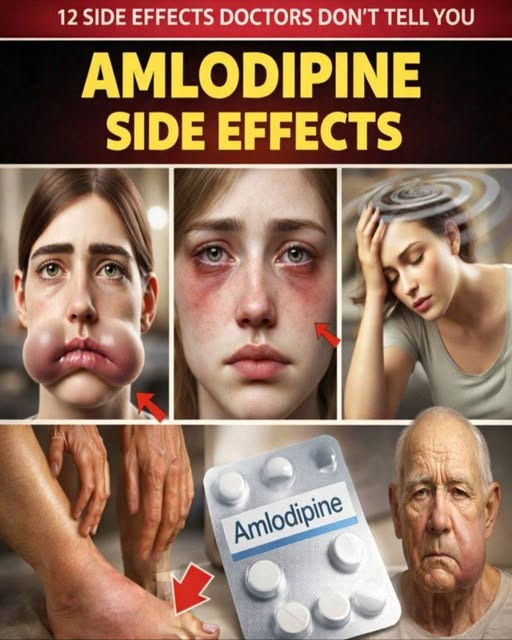
12 Amlodipine Side Effects You Should Know About: Common Symptoms and Serious Warning Signs
Amlodipine is a widely prescribed medication used to treat high blood pressure and certain types of chest pain, known as angina. By relaxing blood vessels, it helps blood flow more easily and reduces the workload on the heart. For many people, it is an effective long-term treatment that helps lower the risk of complications associated with uncontrolled blood pressure.
Like any medication, however, amlodipine can cause side effects. Some are relatively common and manageable, while others are rare and require prompt medical attention. Knowing what to watch for can help you recognize a possible medication reaction and understand when to contact your healthcare professional.
One important point deserves emphasis: experiencing a side effect does not automatically mean amlodipine is unsafe for you, and you should not stop taking it without medical advice. Uncontrolled high blood pressure can itself cause serious health problems.
This guide explores 12 possible amlodipine side effects, explains which symptoms deserve attention, and discusses practical ways to use the medication safely. The information is based on established medicine guidance and official prescribing information. <Cite refs={["turn404272search0","turn404272search1","turn404272search2"]}/>
What Is Amlodipine and How Does It Work?
Amlodipine belongs to a class of medicines called calcium channel blockers. It is commonly prescribed to treat hypertension and certain forms of angina.
The medication works by relaxing the smooth muscles in the walls of blood vessels. As the vessels widen, blood can flow more easily, helping reduce blood pressure. In people with certain types of angina, this action can also help reduce episodes of chest pain.
Doctors may prescribe amlodipine alone or alongside other medications, depending on a person's condition and treatment goals.
Amlodipine is generally taken once daily, and its effects develop gradually. It may take time for a clinician to assess the full response to treatment and determine whether adjustments are needed.
The dose is individualized according to the person's condition, response, age, and other relevant medical factors. Never increase the dose or take an additional tablet because your blood pressure reading is higher than usual without professional guidance.
1. Swelling in the Ankles, Feet, or Legs
Swelling around the ankles and feet, known as peripheral edema, is one of the most recognized side effects of amlodipine.
You may notice that your shoes feel tighter, your socks leave deeper marks, or your ankles appear puffier toward the end of the day.
Why does this happen?
Amlodipine relaxes small arteries and changes the pressure within the blood vessels. This can encourage fluid to move into surrounding tissues, particularly in the lower legs.
The swelling is related to the way the medication affects circulation and does not automatically mean that the kidneys are failing or that the body is retaining too much fluid overall.
What should you do?
Tell your healthcare professional if swelling develops, persists, or becomes uncomfortable. The clinician may assess other possible causes, review your dose, or consider an alternative treatment if appropriate.
Do not stop amlodipine or take a water pill on your own to treat the swelling. Diuretics are not necessarily an effective solution for this particular mechanism of edema.
Seek urgent care if swelling is accompanied by severe breathlessness, chest pain, or other serious symptoms, because these may indicate a different medical problem. <Cite refs={["turn404272search0","turn404272search2","turn404272search4"]}/>
2. Dizziness or Lightheadedness
Some people experience dizziness or lightheadedness while taking amlodipine, particularly when starting treatment or after a dose change.
You might feel unsteady when standing up, briefly lightheaded, or as though you need to sit down.
Why can it happen?
Because amlodipine lowers blood pressure, some people may experience symptoms related to a change in blood pressure or their individual response to treatment.
Dizziness can also have unrelated causes, including dehydration, inner-ear conditions, anemia, or other medicines.
How can you reduce the risk?
Sit down if you feel lightheaded.
Stand up gradually after sitting or lying down.
Avoid driving or operating machinery while dizzy.
Contact your healthcare professional if the symptoms persist, worsen, or interfere with daily activities.
Fainting, severe weakness, or dizziness accompanied by chest pain or breathing difficulty requires urgent medical assessment.
3. Headaches
Headaches are another possible side effect, particularly during the early period of treatment.
Some people describe a mild pressure-like headache, while others experience a more noticeable but temporary discomfort.
What causes it?
Changes in blood vessel tone may contribute to headaches in some people. However, headaches have many possible causes, and it is not always possible to attribute one to amlodipine.
What can help?
Rest, regular meals, and adequate fluid intake may help when appropriate for your health condition. Before adding an over-the-counter painkiller, ask a pharmacist or healthcare professional which option is suitable for you, particularly if you have kidney disease, stomach ulcers, or take other medicines.
A severe, sudden headache, especially one accompanied by weakness, confusion, vision changes, or difficulty speaking, requires emergency assessment rather than being assumed to be a medication side effect.
4. Flushing or a Warm Feeling in the Face
Amlodipine can cause flushing, which may make your face or neck appear red or feel unusually warm.
Some people notice it after taking the medication, while others experience it intermittently.
Why does flushing occur?
The medication relaxes blood vessels. Changes in blood vessel diameter near the skin can produce a sensation of warmth or visible redness.
Flushing is often mild, but persistent or uncomfortable symptoms should be discussed with a healthcare professional.
If facial redness occurs alongside swelling of the lips, tongue, or throat, or difficulty breathing, seek emergency help because these can be signs of a serious allergic reaction.
5. Fatigue or Unusual Tiredness
Some people taking amlodipine report feeling tired, weak, or less energetic than usual.
The symptom can be frustrating when it interferes with work, exercise, or everyday responsibilities.
Is amlodipine always the cause?
No. Fatigue can result from many conditions, including poor sleep, anemia, thyroid problems, depression, infection, and other medications.
If tiredness begins after starting amlodipine, note when it occurs and how strongly it affects you. A healthcare professional can assess whether it may be related to treatment or another condition.
Do not assume that severe or persistent fatigue is harmless simply because you take a blood pressure medication.
6. Nausea or Stomach Discomfort
Amlodipine can cause nausea or abdominal discomfort in some people.
Symptoms may include an unsettled stomach, mild nausea, or pain in the abdominal area.
These effects are not specific to amlodipine, so a clinician may need to consider other possible causes, including digestive conditions or other medicines.
If the symptoms are persistent, worsen, or interfere with eating and drinking, seek medical advice.
Sudden, severe, persistent abdominal pain—particularly if accompanied by vomiting or fever—needs urgent assessment. Rarely, amlodipine has been associated with pancreatitis, an inflammation of the pancreas. <Cite refs={["turn404272search0","turn404272search2"]}/>
7. Palpitations or a Noticeable Heartbeat
Some people experience palpitations while taking amlodipine. This means that the heartbeat feels unusually noticeable, rapid, pounding, or fluttering.
Palpitations can be unsettling, but they do not always indicate a dangerous heart rhythm.
Possible causes include medication effects, anxiety, caffeine, dehydration, thyroid problems, and other heart conditions.
When should you seek help?
Contact your healthcare professional if palpitations are new, persistent, recurrent, or bothersome.
Seek emergency care if palpitations occur with chest pain, severe breathlessness, fainting, or a feeling that you may lose consciousness.
A clinician may review your medication and determine whether further assessment, such as an electrocardiogram, is needed.
8. Constipation or Diarrhea
Digestive changes, including constipation or diarrhea, have been reported with amlodipine.
Constipation may involve harder stools, straining, or less frequent bowel movements. Diarrhea can cause loose stools and may contribute to dehydration if it is severe or prolonged.
These symptoms are common in the general population and may be unrelated to the medication.
If symptoms persist, discuss them with a healthcare professional. Do not begin a new medicine or supplement to treat them without checking whether it is suitable for you.
Seek prompt medical care for severe abdominal pain, bloody stools, or signs of significant dehydration.
9. Drowsiness or Sleepiness
Amlodipine can cause sleepiness in some people, although not everyone experiences this effect.
If you feel unusually drowsy after taking the medication, avoid driving, cycling in traffic, or operating machinery until you feel alert again.
Persistent daytime sleepiness can also result from poor sleep, sleep apnea, other medications, or underlying health conditions.
If the symptom is severe or continues to interfere with daily life, tell your healthcare professional.
10. Muscle Stiffness, Cramps, or Tremors
Some people report muscle stiffness, cramps, or tremors while taking amlodipine.
These symptoms are less central to its usual side-effect profile than ankle swelling, dizziness, or headache, and they may have other explanations.
For example, cramps can be related to physical exertion, dehydration, electrolyte disturbances, or other medicines.
If muscle symptoms begin after starting treatment, become persistent, or are accompanied by marked weakness, discuss them with a healthcare professional.
Sudden one-sided weakness, facial drooping, or difficulty speaking is an emergency and should not be attributed to a medication without urgent evaluation.
11. Skin Rash or an Allergic Reaction
Amlodipine can occasionally be associated with skin reactions, including rash or itching. Serious allergic reactions are rare but can be life-threatening.
A mild rash should be discussed with a healthcare professional, especially if it begins soon after starting the medication or spreads.
Signs of a serious allergic reaction
Seek emergency medical help if you experience:
Swelling of the lips, tongue, or throat.
Difficulty breathing or swallowing.
A rapidly developing, widespread allergic reaction.
Collapse or severe dizziness associated with other signs of anaphylaxis.
A painful rash with blistering, skin peeling, or sores involving the mouth or eyes also requires urgent medical evaluation.
Do not wait for a routine appointment if you suspect a severe allergic reaction. <Cite refs={["turn404272search0","turn404272search1"]}/>
12. Rare Liver Problems and Worsening Chest Pain
Two important but uncommon concerns are liver injury and worsening angina, or chest pain.
Possible liver-related symptoms
Rare cases of medication-associated liver injury have been reported with amlodipine. Symptoms such as yellowing of the skin or eyes, dark urine, or persistent unexplained nausea and abdominal discomfort need medical evaluation.
These symptoms can have many causes, and their presence does not prove that amlodipine has damaged the liver.
Worsening chest pain
In some people, particularly those with severe obstructive coronary artery disease, chest pain or an acute heart attack can occur or worsen after treatment is started or the dose is increased.
This is uncommon, but it is important to recognize.
New, severe, or worsening chest pain requires emergency medical attention. Do not assume it is a normal adjustment to medication. <Cite refs={["turn404272search3","turn404272search4"]}/>
Which Amlodipine Side Effects Are Most Common?
The most commonly reported side effects include ankle or leg swelling, dizziness, headache, flushing, palpitations, fatigue, nausea, and abdominal discomfort. Not everyone experiences them, and their severity varies.
The likelihood of certain effects, particularly swelling, can increase with higher doses.
Rare serious reactions are possible, but an online symptom list cannot determine whether a particular symptom is caused by amlodipine. The timing of symptoms, other medications, medical history, and clinical examination all matter. <Cite refs={["turn404272search2","turn404272search7"]}/>
Who Should Discuss Extra Precautions With Their Doctor?
Before starting amlodipine, tell your healthcare professional about your medical history and all medicines you take.
Additional consideration may be needed for people who have:
Liver disease, which can affect how the medicine is processed.
Very low blood pressure or certain heart conditions.
A history of significant reactions to amlodipine.
Multiple medications that may interact.
Pregnancy or breastfeeding, when treatment should be reviewed individually.
Amlodipine can interact with certain other medicines, so consult your pharmacist or clinician before adding prescription drugs, over-the-counter products, or supplements.
Do not assume that a medicine or herbal product is safe simply because it is sold without a prescription.
What Should You Do if You Notice Side Effects?
The right response depends on the symptom and its severity.
For mild but persistent effects, such as ankle swelling or headaches, contact your healthcare professional to discuss possible causes and treatment options.
For severe symptoms—such as chest pain, fainting, difficulty breathing, or swelling of the throat—seek emergency help.
Keep a record of when symptoms occur, when you take your medication, and whether anything makes them better or worse. This information can help your clinician assess the situation.
Do not stop amlodipine abruptly or change the dose on your own. If the medication is causing troublesome side effects, a healthcare professional may be able to adjust the treatment plan safely. <Cite refs={["turn404272search0","turn404272search1"]}/>
Frequently Asked Questions
Can amlodipine cause swollen feet?
Yes. Swelling of the feet and ankles is one of its most common side effects. Contact your healthcare professional if it develops or becomes uncomfortable, and seek urgent care if it occurs with severe breathlessness or chest pain.
Can amlodipine cause dizziness?
Yes. Dizziness or lightheadedness can occur, particularly when starting treatment or changing the dose. Avoid driving while dizzy and seek medical advice if the symptom persists or becomes severe.
Can amlodipine damage the liver?
Rare cases of liver injury have been reported, but this is not a common effect. Symptoms such as yellowing of the eyes or skin should be medically assessed.
Should I stop amlodipine if I experience side effects?
Do not stop or change the dose without medical guidance. Some side effects can be managed, and your healthcare professional can decide whether an adjustment or alternative treatment is appropriate.
Can I take other medicines with amlodipine?
Some combinations require caution or dose adjustments. Tell your pharmacist or doctor about all prescription medicines, over-the-counter products, and supplements you use before starting anything new.
How long do amlodipine side effects last?
Some mild effects may improve as your body adjusts, while others can persist. The duration varies by person and symptom. Consult your healthcare professional if a side effect is troublesome, worsening, or not improving.
Final Thoughts
Amlodipine helps many people manage high blood pressure and angina, but understanding its potential side effects is an important part of safe treatment.
Ankle swelling, dizziness, headaches, flushing, and fatigue are among the more common effects. Serious allergic reactions, significant skin reactions, worsening chest pain, and rare liver problems require particular attention.
The key is to recognize symptoms without becoming unnecessarily frightened. A symptom does not automatically mean that the medication is dangerous or that you should stop taking it.
If you experience a new or persistent problem, speak with your healthcare professional. If you develop severe chest pain, difficulty breathing, fainting, or signs of a serious allergic reaction, seek emergency medical care.
The safest approach is informed treatment, appropriate monitoring, and open communication with your healthcare team.
Medical disclaimer: This article is for educational purposes only and does not replace professional medical advice, diagnosis, or treatment. Never stop or change a prescribed medication without consulting your healthcare professional.