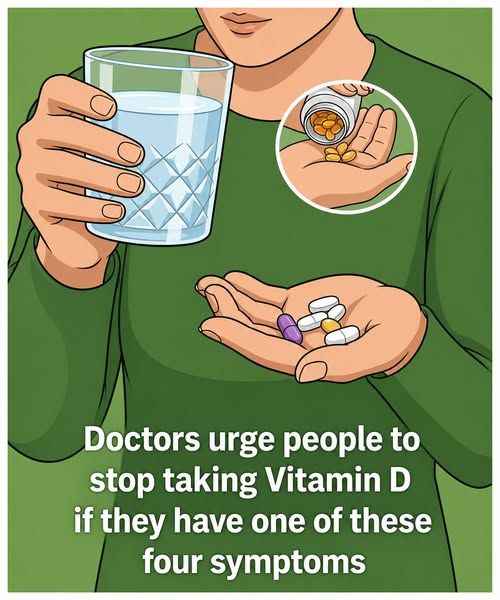
4 Warning Signs You May Be Taking Too Much Vitamin D
Vitamin D plays an essential role in maintaining healthy bones, supporting muscle function, and helping the body absorb calcium. Many people take vitamin D supplements to prevent or treat a deficiency, particularly when their dietary intake or sunlight exposure is insufficient.
However, taking too much vitamin D can be harmful. Unlike some water-soluble vitamins, vitamin D is stored in the body, and excessive supplement intake can cause calcium to build up in the blood. This condition is called hypercalcemia and can affect the kidneys, bones, heart, and nervous system.
The good news is that vitamin D toxicity is uncommon when supplements are taken at appropriate doses. It usually results from excessive supplementation, rather than normal exposure to sunlight or eating foods that contain vitamin D.
Here are four important warning signs to recognize.
1. Persistent Nausea, Vomiting, or Loss of Appetite
One possible sign of excessive vitamin D intake is digestive discomfort.
When vitamin D levels become excessively high, calcium can accumulate in the bloodstream. Elevated calcium levels may cause nausea, vomiting, abdominal discomfort, constipation, and a reduced appetite.
These symptoms are not specific to vitamin D toxicity. They can also occur with infections, digestive conditions, and many other health problems.
What to do: If you develop persistent nausea or vomiting while taking high-dose vitamin D, contact a healthcare professional. Seek urgent care if you cannot keep fluids down or develop significant weakness or confusion.
A clinician may recommend blood tests to check calcium levels, kidney function, and vitamin D status.
2. Excessive Thirst and Frequent Urination
Have you noticed that you are unusually thirsty or need to urinate much more often than normal?
Excess vitamin D can raise calcium levels, which may interfere with the kidneys' ability to concentrate urine. This can cause increased urination, excessive thirst, and dehydration.
If dehydration becomes severe, you may also experience dizziness, weakness, or confusion.
What to do: Do not dismiss persistent thirst and frequent urination, especially if they occur alongside high-dose supplement use. Arrange medical assessment to identify the cause.
If you have kidney disease or heart failure, follow your healthcare professional's fluid recommendations rather than forcing yourself to drink large amounts of water.
3. Unusual Muscle Weakness, Fatigue, or Confusion
Vitamin D supports normal muscle function, but excessive intake can have the opposite effect when it causes hypercalcemia.
Possible symptoms include:
Unusual muscle weakness.
Persistent tiredness or lethargy.
Difficulty concentrating.
Confusion or changes in mental alertness.
These symptoms can have many explanations, including other medical conditions and medication side effects. They should not automatically be attributed to vitamin D.
What to do: Contact a healthcare professional if you experience persistent or unexplained weakness while taking supplements, particularly if you take high doses.
Sudden confusion, severe drowsiness, or difficulty waking requires emergency medical attention.
4. Kidney Stones or Pain in the Side or Back
The kidneys help regulate calcium levels and remove waste products from the body. Excessive vitamin D intake can increase calcium absorption and urinary calcium levels, potentially contributing to kidney stones and, in severe cases, kidney damage.
Possible warning signs include:
Sharp pain in the side, back, or lower abdomen.
Blood in the urine.
Nausea accompanied by severe flank pain.
Painful or difficult urination.
Kidney stones have many possible causes, so these symptoms do not prove that vitamin D is responsible.
What to do: Seek medical assessment for suspected kidney stones. Severe pain, fever, difficulty urinating, or repeated vomiting warrants urgent care.
If you suspect you have taken too much vitamin D, tell the clinician the exact product, dose, and duration of use.
How Much Vitamin D Is Too Much?
The appropriate amount depends on your age, health, diet, and whether you are treating a diagnosed deficiency.
For most adults, the recommended dietary intake is generally 600 international units (IU) per day through age 70 and 800 IU per day after age 70, according to U.S. guidance.
For adults, the general tolerable upper intake level is 4,000 IU (100 micrograms) per day from all sources. This is a safety limit for routine intake, not a treatment target. A healthcare professional may prescribe higher doses for a limited period to treat a deficiency under appropriate supervision.
Do not increase your dose simply because you think more vitamin D will provide greater benefits.
What Should You Do If You Notice These Symptoms?
If you develop symptoms that could indicate vitamin D toxicity:
Check the strength and instructions on your supplement bottle.
Review whether you are taking multiple products that contain vitamin D.
Contact a healthcare professional promptly, particularly if you take high doses or have persistent symptoms.
Ask whether blood tests for calcium, kidney function, and vitamin D are appropriate.
Seek urgent medical care for severe vomiting, confusion, significant weakness, or symptoms of a kidney problem.
If you suspect that you have taken an excessive amount, seek medical advice rather than trying to correct the problem yourself.
Should You Stop Taking Vitamin D Immediately?
Not everyone who experiences one of these symptoms needs to stop vitamin D permanently.
If toxicity is suspected, a clinician may advise temporarily stopping vitamin D supplements while arranging an assessment. However, people taking prescribed vitamin D for a confirmed deficiency or another medical condition should obtain individualized advice before changing their treatment.
Never take additional high-dose vitamin D to compensate for a missed dose.
Final Thoughts
Vitamin D is essential for good health, but excessive supplementation can cause serious problems. Persistent nausea, excessive thirst, frequent urination, unusual weakness, confusion, and kidney-related symptoms may be warning signs of elevated calcium levels.
These symptoms have many possible causes, so proper medical evaluation is important.
The safest approach is to take vitamin D at the recommended dose, avoid combining high-dose supplements without guidance, and seek medical advice if you develop concerning symptoms.
Medical disclaimer: This article is for educational purposes only and does not replace individualized medical advice, diagnosis, or treatment.