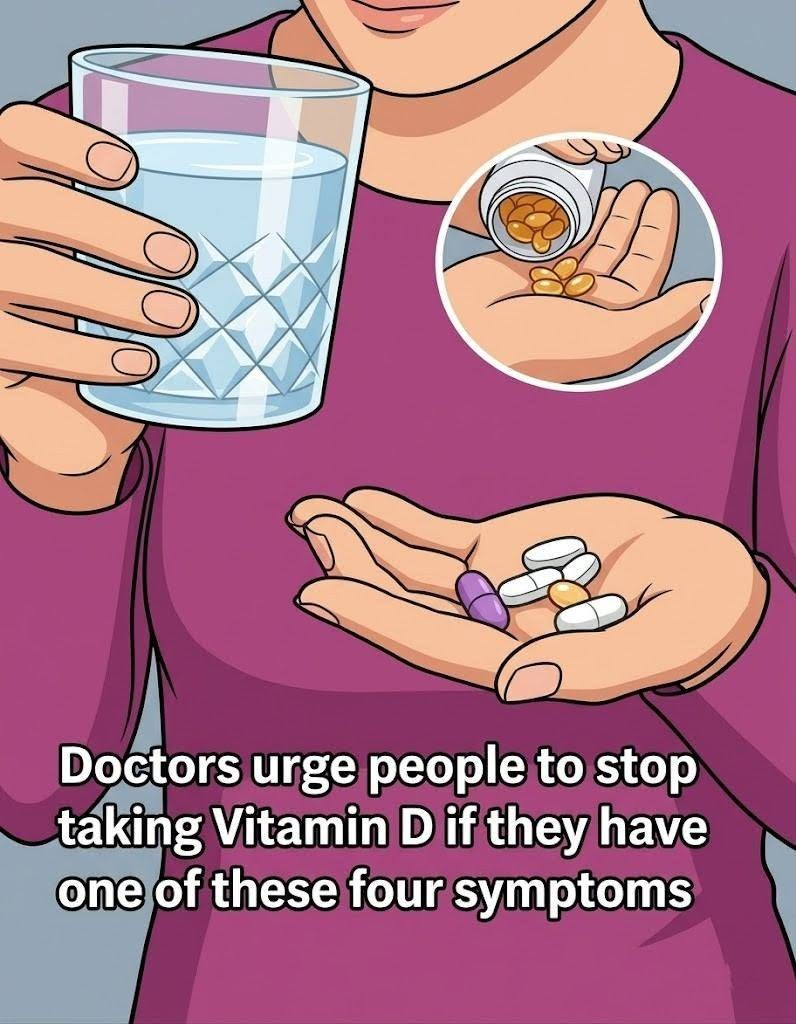
Taking Vitamin D? 4 Warning Signs You Shouldn’t Ignore
Vitamin D plays an important role in maintaining strong bones, supporting muscle function, and helping the body absorb calcium. Many people take vitamin D supplements to prevent or treat a deficiency, particularly when recommended by a healthcare professional.
However, taking too much vitamin D can be harmful. Excessive intake can cause calcium to build up in the blood, a condition known as hypercalcemia. In severe cases, this can damage the kidneys and affect other organs. <Cite refs={["turn799041search0","turn799041search4"]}/>
The important distinction is that vitamin D toxicity is uncommon when supplements are taken correctly. The symptoms described below can have many causes and do not automatically mean that vitamin D is responsible.
1. Persistent Nausea and Vomiting
One possible sign of excessive vitamin D intake is ongoing nausea, sometimes accompanied by vomiting.
This may occur when vitamin D levels become excessively high and cause calcium levels in the blood to rise.
Other possible symptoms include:
Reduced appetite.
Abdominal discomfort.
Persistent vomiting.
Difficulty keeping fluids down.
These symptoms can also result from infections, digestive conditions, and other medications.
What to do: If you take high-dose vitamin D and develop persistent nausea or vomiting, contact a healthcare professional promptly. Seek urgent care if you cannot keep fluids down or develop signs of significant dehydration.
2. Unusual Muscle Weakness or Fatigue
Excessive vitamin D can cause high calcium levels, which may contribute to muscle weakness, fatigue, and a general feeling of being unwell.
You might notice that ordinary activities feel more difficult or that you are unusually tired despite getting adequate rest.
However, fatigue and weakness are nonspecific symptoms. They can also be associated with anemia, thyroid problems, infections, poor sleep, and many other conditions.
What to do: Discuss persistent or unexplained weakness with your healthcare professional, particularly if you have been taking high doses of vitamin D. Blood tests may be needed to check your calcium level, vitamin D status, and kidney function.
3. Excessive Thirst and Frequent Urination
Excessive vitamin D intake can raise blood calcium levels, which may affect the kidneys' ability to regulate water and urine.
Possible warning signs include:
Feeling unusually thirsty throughout the day.
Urinating more often than normal.
Passing larger amounts of urine.
Waking repeatedly at night to urinate.
Experiencing symptoms of dehydration.
These symptoms may also be associated with diabetes, kidney conditions, or other medical problems.
What to do: Seek medical advice if these symptoms develop, especially if you are taking high-dose vitamin D. Significant dehydration, confusion, or severe weakness requires urgent medical assessment. <Cite refs={["turn799041search0","turn799041search4"]}/>
4. Constipation, Loss of Appetite, or Confusion
Elevated calcium levels can affect the digestive system and, in more serious cases, the nervous system.
Potential symptoms include:
Constipation.
Reduced appetite.
Abdominal discomfort.
Unusual drowsiness or fatigue.
Difficulty concentrating or confusion.
Confusion is particularly concerning when it appears suddenly or occurs alongside vomiting, dehydration, or severe weakness.
What to do: Contact a healthcare professional promptly if you experience persistent digestive symptoms while taking high-dose vitamin D. Sudden confusion or a significant change in alertness requires emergency medical attention.
Can Vitamin D Supplements Damage Your Kidneys?
Yes. Excessive vitamin D intake can cause high calcium levels, which may lead to kidney stones or kidney injury. Severe toxicity can cause serious kidney damage and, in extreme cases, kidney failure. <Cite refs={["turn799041search0","turn799041search4"]}/>
The risk is usually associated with excessive supplement intake, dosing mistakes, or taking high doses for longer than recommended—not ordinary exposure to sunlight.
People with kidney disease or certain medical conditions may need individualized dosing and monitoring.
How Much Vitamin D Is Too Much?
The appropriate amount depends on your age, health, diet, blood test results, and reason for taking the supplement.
For most adults, the U.S. National Institutes of Health identifies 4,000 IU (100 micrograms) per day as the general tolerable upper intake level from all sources. This is not a recommended daily target, and some patients may be prescribed higher doses temporarily under medical supervision.
Taking more than the recommended amount does not necessarily provide additional benefits and can increase the risk of harm. <Cite refs={["turn799041search0","turn799041search1"]}/>
To reduce the risk of taking too much:
Check the dose listed on your supplement label.
Avoid accidentally combining several products that contain vitamin D.
Follow your prescription instructions if you are receiving high-dose treatment.
Ask your pharmacist or healthcare professional before increasing your dose.
Should You Stop Taking Vitamin D If You Notice These Symptoms?
Do not assume that every symptom is caused by vitamin D. The appropriate response depends on your symptoms, the dose you take, and whether the supplement was prescribed.
If you suspect you have taken too much vitamin D, contact a healthcare professional promptly. They may advise temporarily withholding supplements and checking your blood calcium, vitamin D level, and kidney function.
If you have severe vomiting, significant confusion, severe dehydration, or other serious symptoms, seek urgent medical care.
If you take prescribed vitamin D to treat a deficiency or another medical condition, do not permanently discontinue treatment or change your prescribed schedule without professional advice.
How to Take Vitamin D More Safely
A few simple precautions can help:
Take the dose recommended by your healthcare professional or appropriate product instructions.
Check whether the dose is listed in international units (IU) or micrograms (mcg).
Avoid combining multiple vitamin D supplements without checking the total amount.
Ask your clinician about appropriate monitoring if you are taking high-dose treatment.
Tell your healthcare professional about kidney disease, other medical conditions, and any supplements you use.
Store supplements safely and follow the dosing instructions carefully.
Frequently Asked Questions
Can vitamin D toxicity happen from sunlight?
Ordinary sunlight exposure does not cause vitamin D toxicity because the body regulates vitamin D production in the skin. Most cases of toxicity are associated with excessive supplement intake. <Cite refs={["turn799041search0","turn799041search1"]}/>
Can vitamin D cause kidney problems?
Yes. Excessive vitamin D can raise calcium levels and contribute to kidney stones or kidney injury. Serious complications are uncommon but can occur with significant toxicity.
What tests can identify vitamin D toxicity?
A healthcare professional may order a blood calcium test, a 25-hydroxyvitamin D test, and tests of kidney function. The choice of tests depends on your symptoms and medical history.
Is vitamin D safe to take every day?
Vitamin D can be taken daily when the dose is appropriate for the individual. Some people need supplements, while others may not. Ask a healthcare professional which dose is suitable for your situation.
The Bottom Line
Vitamin D is essential for health, but excessive intake can cause high calcium levels, digestive symptoms, muscle weakness, dehydration, and kidney complications.
Persistent nausea or vomiting, unusual weakness, excessive thirst and urination, and constipation or confusion are symptoms worth taking seriously—especially if you have been taking high doses.
Do not panic or stop prescribed treatment solely because of a social media warning. If you suspect an overdose or develop concerning symptoms, seek medical advice and have your treatment reviewed.
Medical Disclaimer
This article is for general educational purposes only and does not replace professional medical advice, diagnosis, or treatment. If you suspect vitamin D toxicity or experience severe symptoms, seek appropriate medical care.