4 Warning Signs of Vitamin B12 Deficiency You Should Never Ignore
Vitamin B12 plays an essential role in keeping your nervous system healthy, helping your body produce red blood cells, and supporting DNA production. When your body does not get enough of this important vitamin, symptoms can develop gradually and may be easy to overlook.
Some people initially notice unusual tiredness or changes in their mouth. Others experience tingling in their hands and feet or problems with balance. Because these symptoms can have many causes, recognizing them early can help you seek appropriate testing and treatment.
Here are four important warning signs of vitamin B12 deficiency, along with what you can do if you notice them.
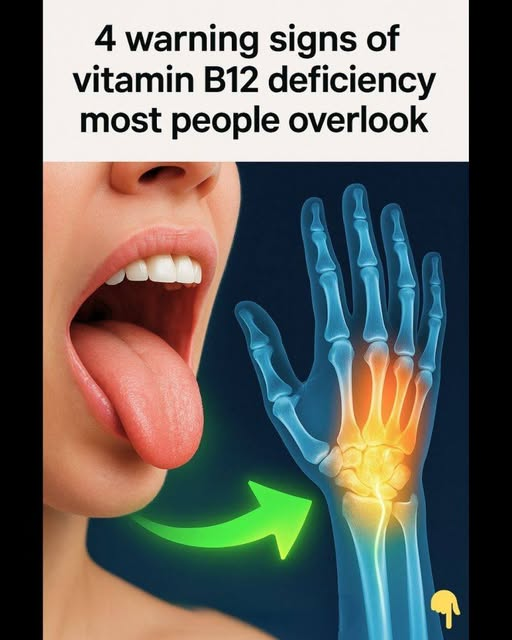
1. A Sore, Red, or Smooth Tongue
One possible sign of vitamin B12 deficiency is glossitis, a condition in which the tongue becomes inflamed.
You may notice that your tongue looks unusually red, smooth, or swollen. It may also feel sore, burn, or become uncomfortable when eating spicy or acidic foods.
Some people also experience mouth ulcers or cracks at the corners of their lips.
These symptoms can occur because vitamin B12 is needed for normal cell production. However, a sore tongue is not specific to B12 deficiency; iron deficiency, other nutritional problems, infections, and certain medications can cause similar changes.
What to do: If tongue soreness or mouth changes persist, consult a healthcare professional. Blood tests may help identify whether vitamin B12 deficiency or another condition is responsible.
2. Tingling or Numbness in the Hands and Feet
Vitamin B12 is important for maintaining the protective covering around nerves. When levels remain too low, nerve damage can develop.
Possible symptoms include:
Tingling or a pins-and-needles sensation.
Numbness in the fingers or toes.
Burning or unusual sensations in the feet.
Reduced ability to feel touch or temperature.
These symptoms may begin gradually and become more noticeable over time.
Numbness and tingling can also result from diabetes, nerve compression, certain medications, and other medical conditions. Therefore, they should not automatically be attributed to vitamin B12 deficiency.
What to do: Arrange a medical assessment if you develop persistent or unexplained tingling or numbness. Early diagnosis matters because prolonged B12 deficiency can sometimes cause neurological damage that does not completely resolve.
Sudden numbness or weakness on one side of the body, especially with difficulty speaking or facial drooping, requires emergency medical attention.
3. Unusual Fatigue, Weakness, or Shortness of Breath
Vitamin B12 helps the body produce healthy red blood cells, which carry oxygen throughout the body. A deficiency can lead to megaloblastic anemia, a condition in which red blood cells become abnormally large and do not function normally.
You may experience:
Persistent tiredness or weakness.
Reduced energy during everyday activities.
Pale skin.
Shortness of breath during exertion.
Dizziness or lightheadedness.
Heart palpitations.
These symptoms can develop slowly, making it tempting to blame them on aging, stress, or a busy lifestyle.
However, fatigue has many possible causes, including iron deficiency, thyroid problems, poor sleep, and other illnesses.
What to do: If tiredness persists or occurs alongside other symptoms of B12 deficiency, speak with a healthcare professional. A blood count and vitamin B12 testing may help determine the cause.
Severe shortness of breath, chest pain, or fainting requires urgent medical assessment.
4. Balance Problems, Memory Changes, or Difficulty Concentrating
Vitamin B12 deficiency can affect the nervous system, sometimes leading to symptoms beyond tingling or numbness.
Some people experience:
Difficulty maintaining balance.
Unsteadiness while walking.
Problems with concentration.
Memory difficulties.
Changes in mood.
Confusion in more advanced cases.
These symptoms are not proof of a vitamin deficiency. Many neurological, psychological, and medical conditions can cause similar changes.
Nevertheless, unexplained balance difficulties or cognitive changes deserve attention, especially when they occur alongside numbness, tingling, or unusual fatigue.
What to do: Seek medical advice if these symptoms are new, persistent, or worsening. Do not assume that memory problems or balance changes are simply a normal part of getting older.
Sudden confusion, a sudden inability to walk, or sudden neurological changes should be treated as an emergency.
Who Is at Greater Risk of Vitamin B12 Deficiency?
Vitamin B12 occurs naturally in foods such as fish, meat, poultry, eggs, milk, and other dairy products. Some fortified foods, including certain breakfast cereals and plant-based products, also contain it.
Certain people are more likely to develop a deficiency, including:
People following a vegan diet who do not use reliable B12-fortified foods or supplements.
Older adults with reduced absorption of vitamin B12 from food.
People with pernicious anemia, an autoimmune condition that interferes with B12 absorption.
People who have had certain stomach or intestinal surgeries.
People with digestive conditions that affect nutrient absorption.
People taking certain medications for a long time, including metformin or some acid-reducing medicines.
Taking these medications does not mean you will definitely develop a deficiency. If you have risk factors or symptoms, ask your healthcare professional whether testing is appropriate.
What Causes Vitamin B12 Deficiency?
A deficiency does not always mean that someone is eating too little B12.
Possible causes include:
Insufficient dietary intake: People who eat few or no animal-derived foods may need fortified foods or a supplement to meet their requirements.
Poor absorption: Conditions affecting the stomach or small intestine can prevent the body from absorbing enough B12.
Pernicious anemia: This autoimmune condition interferes with the body's ability to absorb vitamin B12 effectively.
Medication-related factors: Long-term use of certain medicines may contribute to low B12 levels in some people.
Identifying the underlying cause is important because treatment depends on whether the problem is inadequate intake, poor absorption, or another medical condition.
How Is Vitamin B12 Deficiency Diagnosed?
Symptoms alone cannot confirm a vitamin B12 deficiency.
A healthcare professional may review your diet, medical history, medications, and symptoms before ordering blood tests. These may include a complete blood count and a vitamin B12 level. Additional tests, such as methylmalonic acid, may be useful when the initial results are unclear.
Importantly, neurological symptoms related to B12 deficiency can sometimes occur even without obvious anemia. A normal-looking blood count does not always rule out the problem.
If you suspect a deficiency, seek testing rather than relying only on an online symptom checklist.
How Can You Prevent or Treat Vitamin B12 Deficiency?
Treatment depends on the severity and cause of the deficiency.
Options may include:
Eating B12-containing foods such as fish, meat, eggs, and dairy products.
Using reliable fortified foods or supplements when dietary intake is inadequate.
Taking prescribed oral vitamin B12 supplements when appropriate.
Receiving vitamin B12 injections when recommended, particularly in certain absorption problems or more serious cases.
People with significant deficiency or neurological symptoms should receive medical guidance promptly.
Avoid taking high-dose supplements as a substitute for finding out why your levels are low. Treatment may need to continue long term if the underlying cause affects absorption.
Frequently Asked Questions
Can vitamin B12 deficiency develop slowly?
Yes. Symptoms may develop gradually over months or longer, and early signs can be subtle. Some people do not notice symptoms until the deficiency becomes more significant.
Can a sore tongue mean I have low vitamin B12?
It can be one possible sign, but a sore or smooth tongue has several other causes. A healthcare professional can assess the symptoms and recommend testing if needed.
Can vitamin B12 deficiency cause permanent nerve damage?
It can. If the deficiency is prolonged, neurological damage may not completely resolve. Early diagnosis and appropriate treatment improve the chance of recovery.
Should I take vitamin B12 supplements if I feel tired?
Not automatically. Fatigue has many causes, and supplements may not help if your B12 levels are already adequate. Discuss persistent fatigue with a healthcare professional before relying on supplements.
How long does it take to recover from B12 deficiency?
Recovery varies depending on the severity, cause, and treatment. Some symptoms may begin improving within weeks, while anemia and neurological symptoms can take longer. Nerve-related problems may not fully resolve if damage has been prolonged.
Final Thoughts
Vitamin B12 is essential for healthy blood cells and normal nerve function. A sore tongue, tingling hands or feet, unexplained fatigue, and balance or memory changes can sometimes signal a deficiency.
However, these symptoms can also occur with other conditions, so they should not be used to diagnose yourself. If you notice persistent or unexplained symptoms, seek medical advice and ask whether vitamin B12 testing is appropriate.
Medical disclaimer: This article is for educational purposes only and does not replace professional medical advice, diagnosis, or treatment.