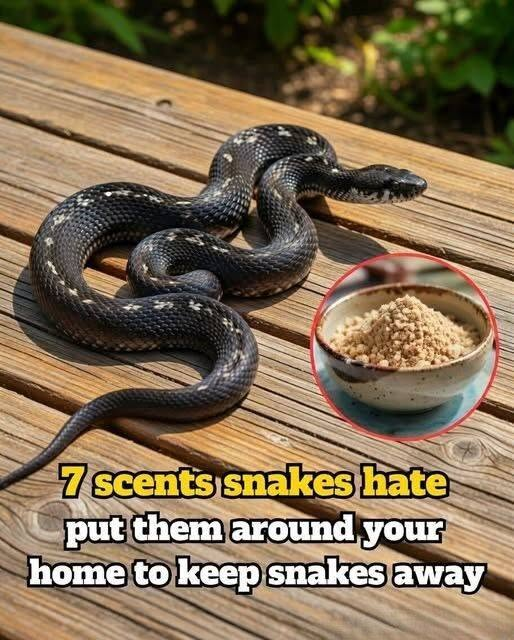
7 Smells People Claim Snakes Hate — and How to Keep Snakes Away From Your Home
Finding a snake near your house can be frightening, especially when you have children or pets. Many homeowners look for natural ways to discourage snakes from entering their yards, and strong-smelling ingredients are often suggested as simple solutions.
You may have heard that cinnamon, garlic, vinegar, or other household products can keep snakes away. But do these methods really work?
The important fact is that no household smell has been reliably proven to keep snakes away from a home or garden. Some substances may affect snake behavior under particular conditions, but popular scent-based remedies are not a dependable way to prevent encounters.
The good news is that there are practical steps you can take to make your property less attractive to snakes.
1. Garlic
Garlic is often recommended in online home remedies because of its strong odor. Some people suggest placing crushed garlic around garden beds or near outdoor entry points.
However, there is insufficient scientific evidence that ordinary garlic reliably repels snakes from residential areas.
A better approach: Remove dense weeds, leaf piles, and other places where snakes can hide. Keep vegetation around doors and frequently used outdoor areas well maintained.
2. Cinnamon
Cinnamon has a strong, distinctive smell, and cinnamon oil has been investigated in certain specialized snake-control applications.
However, research involving particular oils and controlled situations does not establish that sprinkling cinnamon powder around a house will keep snakes away. Ordinary cinnamon powder is not a proven home snake repellent.
A better approach: Seal openings around foundations, doors, pipes, and other possible entry points.
3. Clove Oil
Clove oil contains aromatic compounds that have been investigated in some snake-repellent research. Its effects depend on the formulation and how it is used.
There is no good evidence that placing clove oil around a garden or house provides dependable, long-lasting protection against snakes.
Concentrated essential oils can irritate skin and eyes and may be harmful if swallowed. Keep them away from children and pets, and never spray a snake in an attempt to handle or drive it away.
A better approach: Store firewood away from the house and raise it off the ground where practical, reducing potential hiding places.
4. Peppermint Oil
Peppermint oil is frequently promoted online as a natural snake deterrent. However, reliable evidence that peppermint oil prevents snakes from entering homes or gardens is lacking.
Its strong smell should not be mistaken for a proven protective barrier.
A better approach: Keep grass short, trim overgrown vegetation, and remove piles of boards, rocks, and other debris close to the house.
5. Vinegar
Vinegar is another household ingredient sometimes suggested for repelling snakes. Although its odor is strong to humans, there is no reliable evidence that pouring vinegar around your property will provide effective snake control.
Using large amounts outdoors may also affect plants and soil without solving the problem.
A better approach: Inspect the outside of your home for gaps around doors, windows, pipes, and vents. Seal suitable openings with durable materials.
6. Sulfur
Sulfur powders have been marketed as snake repellents for many years. Despite these claims, university extension research has found that sulfur-based products do not consistently repel snakes.
Scattering sulfur around your property can expose people, pets, and the environment to unnecessary risks while giving a false sense of security.
A better approach: Focus on removing shelter and reducing rodents, which are a food source for many snake species.
7. Mothballs
Mothballs are sometimes recommended as a strong-smelling way to keep snakes away. This is not a safe or reliable solution.
Mothballs contain pesticides intended for specific labeled uses, such as protecting stored clothing from certain insects. They are not designed to be scattered around gardens, foundations, or outdoor areas to repel snakes. Their vapors can be harmful to people and animals.
Never use mothballs as a snake repellent. Follow the product label and keep them away from children and pets.
What Actually Works to Reduce Snake Encounters?
Rather than relying on smells, focus on changing the conditions that attract snakes.
1. Remove Hiding Places
Snakes may shelter beneath piles of wood, rocks, scrap materials, thick vegetation, and other debris. Keep these areas tidy, especially near doors, patios, and play spaces.
2. Control Rodents
Mice and rats are important food sources for many snakes. Store animal feed and rubbish securely, clean up spilled birdseed, and address rodent problems safely.
3. Seal Entry Points
Check gaps around doors, windows, foundations, utility pipes, and vents. Repair openings with suitable materials and install properly fitted door sweeps and screens.
4. Maintain Your Garden
Mow grass regularly and trim dense vegetation around the home. Keep shrubs from becoming heavily overgrown next to walls and foundations.
5. Consider Appropriate Snake-Exclusion Fencing
Where encounters are frequent, professionally installed snake-exclusion fencing may help. Its effectiveness depends on the design, installation, maintenance, and local snake species.
6. Keep Outdoor Areas Clear
Avoid leaving rubbish, unused equipment, boards, or other materials scattered around your property. Reduce clutter in sheds and other outbuildings.
What Should You Do If You Find a Snake?
If you encounter a snake near your home, remain calm and keep a safe distance.
Do not touch, corner, or attempt to capture it.
Keep children and pets away.
Give the snake space to move away if it can do so safely.
If it enters your home or remains in a hazardous location, contact an appropriately trained local wildlife professional or relevant authorities.
Do not rely on its color or appearance alone to decide whether it is venomous. If someone is bitten, seek emergency medical care immediately and do not attempt to suck out venom, cut the wound, or apply a tourniquet.
Frequently Asked Questions
What smell keeps snakes away most effectively?
There is no household smell that has been reliably shown to keep snakes away consistently. Removing shelter, controlling rodents, and sealing entry points are more dependable approaches.
Does spreading garlic around the house prevent snakes?
There is insufficient evidence that garlic creates an effective barrier against snakes.
Do mothballs keep snakes away?
No. Mothballs are not intended for this purpose and can expose people and animals to harmful pesticide vapors.
Can essential oils prevent snakes from entering a house?
Essential oils have been investigated in specific applications, but ordinary household use has not been established as a reliable prevention method.
Are snakes attracted to homes because of food?
Snakes may enter residential areas while seeking prey or shelter. Rodents, dense vegetation, and clutter can make some properties more attractive.
Final Thoughts
Strong smells such as garlic, cinnamon, peppermint, and vinegar are often promoted as natural snake repellents, but the evidence does not support relying on them for dependable protection.
The most practical strategy is to reduce hiding places, control rodents, maintain the garden, and seal openings around the home. These steps help reduce the chances of encountering snakes without relying on potentially dangerous chemicals or unproven remedies.
Remember: prevention is more reliable than scent-based myths. A well-maintained property and safe responses to wildlife encounters are the best starting points for keeping your household safer.
Safety note: Follow all product labels and local wildlife guidance. This article is for educational purposes and does not guarantee that snakes will stay away.