Small White Spots on Arms and Legs: What Are They and Should You Worry?
Have you noticed tiny white or lighter-colored spots appearing on your arms or legs? They can look alarming, especially when they seem to become more noticeable with age.
The good news is that small white spots are often harmless, but there are several possible causes, and their appearance alone isn't enough to determine exactly what they are.
One Common Cause: Idiopathic Guttate Hypomelanosis
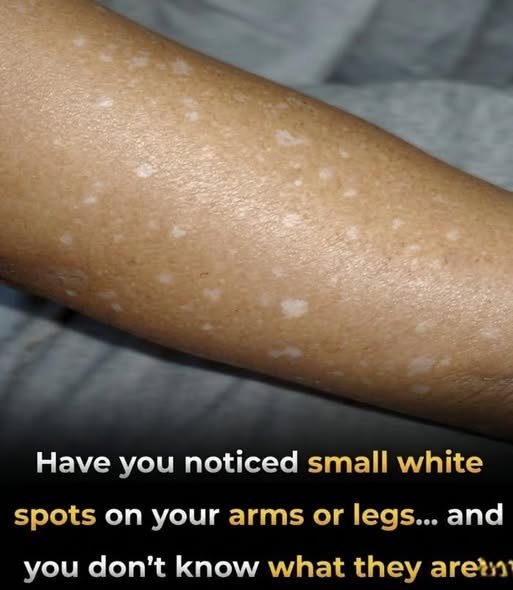
One of the most common explanations for small, flat white spots on the arms and legs is idiopathic guttate hypomelanosis (IGH).
IGH typically appears as multiple small, smooth, pale or white spots, often around 2–5 mm in diameter. They are particularly common on sun-exposed areas such as the forearms and shins. The condition becomes more common with age and is considered benign. DermNet®
Despite their appearance, these spots generally don't cause pain or other symptoms.
Why Do These Spots Appear?
The exact cause of IGH isn't completely understood. Researchers believe several factors may contribute, including:
Natural skin aging
Long-term sun exposure
Genetic factors
Changes affecting pigment-producing cells
The spots are especially noticeable on skin that has experienced significant sun exposure over the years. DermNet®
But Not Every White Spot Is the Same
Other conditions can also cause lighter areas of skin.
Vitiligo
Vitiligo occurs when areas of skin lose their pigment. It can produce white or very light patches and may affect different parts of the body.
Because several conditions can look similar, dermatologists recommend getting an accurate diagnosis rather than assuming every white spot is vitiligo. Académie Américaine de Dermatologie
Tinea Versicolor
This is a common superficial fungal condition that can cause lighter or darker patches, sometimes with subtle scaling. It tends to occur more often on the trunk and upper body, although distribution can vary. DermNet®
Changes After Skin Inflammation or Injury
A previous rash, irritation, injury, or other inflammation can sometimes leave an area of skin lighter than the surrounding skin. This is called post-inflammatory hypopigmentation.
Should You Worry?
If the spots are small, flat, stable and symptom-free, they may simply represent a benign pigment change such as idiopathic guttate hypomelanosis.
However, it's worth having unexplained or changing skin patches evaluated if they:
Rapidly increase in number or size
Become completely white or develop sharply defined borders
Itch, hurt, bleed or develop scaling
Appear suddenly
Are associated with other unusual skin changes
Continue changing over time
A dermatologist can distinguish between conditions that can look very similar. DermNet®
Can You Prevent Them?
Because sun exposure and skin aging may contribute to idiopathic guttate hypomelanosis, protecting your skin from excessive sun exposure is a sensible part of general skin care.
However, there isn't a guaranteed way to prevent these spots, and they don't necessarily indicate that anything is wrong with your health.
The Bottom Line
Small white spots on the arms and legs are often harmless, particularly when they are tiny, flat and stable. Idiopathic guttate hypomelanosis is one common explanation, especially in adults and on sun-exposed areas.
But white spots can have several different causes, including vitiligo, fungal infections and changes following inflammation. If you're unsure what you're seeing, a dermatologist can make the distinction with a skin examination.
Medical Disclaimer
This article is for general educational purposes and cannot diagnose a skin condition from appearance alone. If you develop new, rapidly changing, painful, itchy or spreading white patches, consider speaking with a qualified healthcare professional.