If Your Veins Are Visible in Your Hands, What Does It Mean?
Have you ever loo ked at the back of your hands and noticed that your veins seem more prominent than they used to be? You may have wondered whether this is a sign of aging, dehydration, poor circulation, or an underlying health problem.
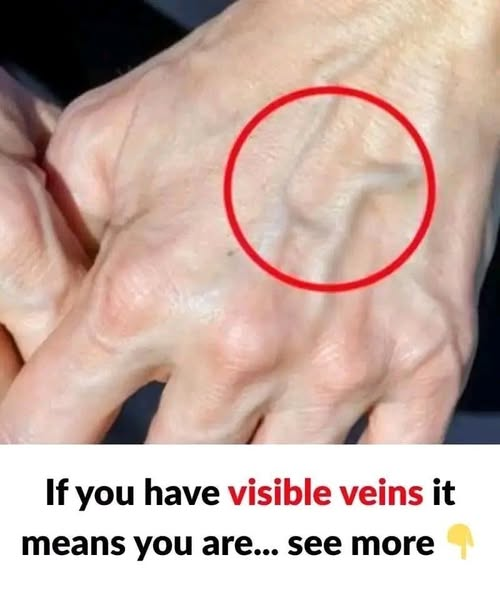
The reassuring news is that visible veins on the hands are often completely normal. They can become more noticeable as skin gets thinner with age, when there is less fat beneath the skin, or after exercise and exposure to warm temperatures. Visible veins alone do not automatically mean that something is wrong. <Cite refs={["turn175755search2","turn175755search6"]}/>
However, changes in how your veins look can sometimes deserve medical attention, especially when they appear suddenly or are accompanied by pain or swelling.
1. Aging Can Make Hand Veins More Visible
As we get older, the skin gradually loses some of its thickness and elasticity. The layer of tissue beneath the skin may also become thinner, making the veins easier to see.
This is one reason why prominent veins are common on the hands of older adults.
In many cases, this is a normal physical change rather than a sign of disease.
What can help? Protect your hands from excessive sun exposure, moisturize regularly, and remember that visible veins caused by normal aging do not usually require medical treatment.
2. Low Body Fat Can Make Veins Stand Out
The amount of fat beneath your skin affects how visible your veins appear.
People with naturally lean hands or lower body fat may have more noticeable veins, even when their circulation is healthy.
If your veins have always been visible and you have no other symptoms, this may simply reflect your natural anatomy.
However, if prominent veins appear alongside unexplained weight loss, persistent fatigue, or other new symptoms, speak with a healthcare professional.
3. Exercise Can Temporarily Make Veins More Prominent
Have you noticed your hand or arm veins becoming more visible after lifting weights, carrying heavy objects, or exercising?
Physical activity increases blood flow to working muscles, which can make superficial veins temporarily more prominent.
This effect is often normal and may become less noticeable after you rest.
If the change is accompanied by unusual pain, significant swelling, or weakness, however, do not assume that exercise is the only explanation.
4. Warm Weather Can Change How Your Veins Look
In warm temperatures, blood vessels near the skin can widen to help your body release heat. As a result, veins may appear more noticeable.
You might observe this after spending time outdoors, taking a warm shower, or exercising in hot weather.
If the veins become less prominent after you cool down and there are no other symptoms, the change is often harmless.
5. Genetics Also Play a Role
Some people naturally have more visible superficial veins than others. Family traits, skin thickness, and the position of veins beneath the skin can all influence their appearance.
If other members of your family have prominent hand veins, genetics may be part of the explanation.
The appearance of your veins alone cannot determine whether you have good or poor circulation.
6. Can Visible Veins Mean Poor Circulation?
Not necessarily. Many people have visible veins without having a circulation disorder.
Problems with veins are more likely to cause additional symptoms, such as swelling, aching, heaviness, skin discoloration, or enlarged and twisted veins—particularly in the legs.
A healthcare professional can assess your symptoms and determine whether further examination or testing is needed. <Cite refs={["turn175755search6","turn175755search9"]}/>
7. When Should You Be Concerned About Visible Veins?
Although visible veins are often harmless, it is important to notice changes that are new, unexplained, or accompanied by other symptoms.
Arrange a medical assessment if you notice:
A vein that becomes newly painful or tender.
Redness or warmth around a vein.
Persistent swelling in a hand, arm, or leg.
A sudden change in the appearance of one limb.
Skin discoloration, sores, or other unexplained skin changes.
Seek urgent medical care if one arm or leg suddenly becomes swollen and painful. If you also experience chest pain, sudden shortness of breath, or coughing up blood, seek emergency medical help. These symptoms can indicate a serious blood clot-related problem. <Cite refs={["turn175755search4","turn175755search6"]}/>
8. Can You Make Visible Hand Veins Disappear?
If your veins are visible because of normal aging, genetics, or naturally thin skin, there may be no medical reason to treat them.
Simple habits such as protecting your skin from the sun and moisturizing your hands can support skin health, but they will not necessarily make veins disappear.
If prominent veins are painful or you are concerned about their appearance, a healthcare professional can discuss whether an underlying condition needs treatment and explain the available options.
Avoid using unproven creams or home remedies that promise to remove veins permanently.
Frequently Asked Questions
Are visible veins on the hands a sign of aging?
They can be. Aging skin often becomes thinner and less elastic, making veins easier to see. However, genetics, exercise, temperature, and body composition can also affect their appearance.
Do visible veins mean I am dehydrated?
Not necessarily. Vein visibility is not a reliable way to diagnose dehydration. Look at your overall symptoms and fluid intake rather than relying on the appearance of your hands.
Are prominent veins dangerous?
Usually not when they are stable and painless. New changes accompanied by pain, warmth, redness, or swelling should be medically assessed.
Can exercise make hand veins permanently larger?
Exercise can make veins temporarily more prominent by increasing blood flow. Regular strength training and changes in muscle size may also affect how visible superficial veins look.
Should I see a doctor if my hand veins have always been visible?
If the appearance is longstanding and you have no other symptoms, it is often a normal variation. If you are concerned or notice a sudden change, a healthcare professional can assess it.
Final Thoughts
Visible veins on your hands do not automatically signal a health problem. Aging, genetics, naturally low body fat, exercise, and warm weather can all make veins more noticeable.
The most important thing is to pay attention to changes rather than judging your health by appearance alone. If a vein becomes painful, warm, red, or swollen—or if one limb suddenly changes—seek appropriate medical advice.
Your hands can show normal changes over time, but visible veins alone cannot diagnose a disease or predict your future health.