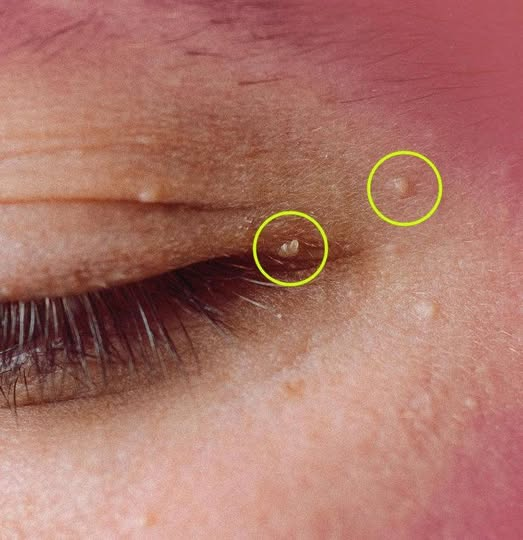
Milia are small, pearly-white or yellowish bumps that most often appear around the eyes, on the eyelids, cheeks, and forehead. They are tiny cysts containing keratin, a protein found naturally in the skin, hair, and nails.
Unlike ordinary pimples, milia do not have an opening through which their contents can easily come out. They are usually painless, harmless, and not contagious.
Milia can affect people of any age, including newborns and adults. In adults, some disappear naturally over time, while others may persist for months or longer.
What Causes Milia?
Milia develop when keratin becomes trapped beneath the surface of the skin. They may appear without an obvious trigger, but some cases are associated with skin damage or certain skincare habits.
Possible contributing factors include:
Skin healing after an injury, burn, or certain skin procedures.
Heavy creams or ointments that may not suit your skin.
Prolonged use of topical steroid medicines in some circumstances.
Sun-related skin damage.
Certain skin conditions that affect the normal skin surface.
Milia are not caused simply by having oily skin, and they should not be confused with cholesterol deposits or ordinary acne.
How to Get Rid of Milia Safely
1. Give Small Bumps Time to Clear
Milia are harmless in most cases, so treatment is not always necessary. Some disappear on their own, although persistent milia in adults may need professional removal.
2. Use Gentle Skincare
Wash your face with a mild cleanser and lukewarm water. Avoid scrubbing the bumps aggressively, and choose skincare products that do not irritate your skin.
If you frequently develop milia, consider asking a dermatologist whether your current creams or ointments are appropriate.
3. Be Careful With Exfoliating Products
Certain exfoliating ingredients or topical retinoids may help some adults with persistent milia, but they are not suitable for everyone.
The skin around the eyes is especially delicate. Do not apply strong acids, retinoids, or other irritating products close to the eyes unless a qualified healthcare professional advises you to do so.
Retinoids such as adapalene and tretinoin also require particular caution during pregnancy; seek medical advice before using them.
4. Consider Professional Removal
If the bumps persist or bother you cosmetically, a dermatologist can confirm the diagnosis and remove them using appropriate sterile instruments.
Professional removal is generally straightforward, but the best approach depends on the location and type of lesion.
Never squeeze, cut, or puncture milia yourself, particularly on the eyelids or near the eyes. Doing so can cause infection, scarring, or eye injury.
When Should You See a Dermatologist?
Seek an assessment if the bumps are persistent, spreading, painful, inflamed, or changing in appearance, or if you are unsure whether they are actually milia.
Other conditions can resemble milia, so an accurate diagnosis is important before starting treatment.
Frequently Asked Questions
Are milia dangerous?
Most milia are harmless and do not require treatment unless they cause cosmetic concern or there is uncertainty about the diagnosis.
Can toothpaste or lemon juice remove milia?
There is no good evidence that these remedies reliably remove milia. They can irritate delicate facial skin, so it is better to avoid them.
Do milia mean I have high cholesterol?
No. Milia are keratin-filled cysts, not cholesterol deposits. Different conditions can cause pale or yellowish bumps, so a clinician can help distinguish them.
Can milia come back after removal?
Yes, new milia may develop even after existing ones have been removed. Appropriate skincare may help in some cases, but complete prevention is not always possible.
Final Thoughts
Milia are common, tiny keratin-filled cysts that often appear around the eyes and cheeks. They are usually harmless, and some resolve naturally. If they persist, a dermatologist can discuss safe removal and suitable skincare options.
Avoid squeezing or puncturing bumps near the eyes, and do not assume every white bump is a milium. The safest treatment begins with knowing exactly what you are treating.