What Are These Tiny White Pellets Beside the Bed? Possible Causes and What to Check
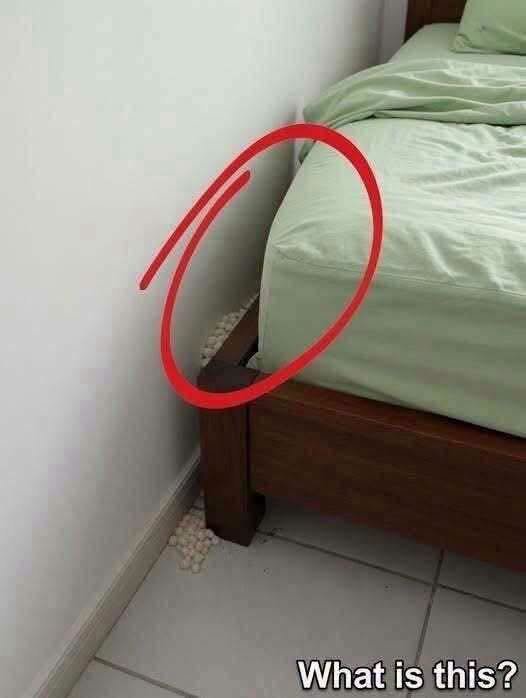
Imagine coming home after a long day, ready to relax, only to notice a strange pile of tiny white pellets beside your bed. At first, you might wonder whether they came from an insect, an animal, or something hidden behind the furniture.
That is exactly what makes this discovery so puzzling. The small, pale objects appear gathered along the wall and around the wooden bed frame, leaving many people wondering where they came from and whether they should be concerned.
Although the sight may look alarming, there are several possible explanations. The most important step is to examine the surrounding area carefully rather than immediately assuming the worst.
What Could These White Pellets Be?
The photograph shows a cluster of small, pale, rounded objects near a wooden bed frame. Their exact identity cannot be confirmed from the image alone, but several possibilities are worth considering.
1. Insect Debris or Pest Activity
Some insects leave small particles or droppings near wooden structures, cracks, and sheltered areas. Certain wood-damaging insects can produce tiny pellets that accumulate beneath an opening in wood.
However, the appearance of these objects is not enough to conclude that termites or another pest are responsible. Their size, texture, shape, and exact location would need to be examined more closely.
If you notice tiny holes in the bed frame, damaged wood, shed insect skins, or fresh piles appearing repeatedly, a pest inspection may help determine the cause.
2. Material Coming From the Bed or Furniture
Not every mysterious pile is caused by insects or animals.
Small beads or pellets can sometimes escape from damaged pillows, mattresses, cushions, or other household items containing loose filling. Packaging materials and other objects stored behind furniture may also leave similar particles behind.
Check the mattress seams, the underside of the bed, nearby cushions, and any objects stored in the gap between the bed and the wall.
If the particles are lightweight, uniform, and similar to the filling inside a household item, this possibility deserves consideration.
3. Debris Entering Through a Gap
Small particles can accumulate in areas that are rarely cleaned, particularly behind heavy furniture.
Look for cracks along the wall, gaps around pipes, openings near the floor, or loose material falling from the ceiling or wall. The location of the pile may help reveal whether the objects are coming from above, behind the bed, or from the furniture itself.
4. Another Unidentified Household Material
Some small household materials can look surprisingly similar when photographed from a distance. Without examining their texture, hardness, and composition, it is difficult to distinguish between biological material and ordinary debris.
For that reason, avoid identifying the objects solely by their color or by the fact that they were found near a bed.
Should You Be Worried?
Finding a mysterious pile does not automatically mean your bedroom has a pest infestation. Nevertheless, it is worth investigating if the particles appeared suddenly or continue to accumulate.
Pay attention to a few important clues:
Repeated appearances: Does the pile return after cleaning?
Nearby openings: Are there small holes or cracks in the wall or wooden furniture?
Changes to the bed: Is the wood damaged, crumbling, or unusually soft?
Other evidence: Are there insects, shed skins, unusual marks, or additional debris nearby?
Taken together, these observations can help narrow down the possibilities. If you suspect wood-damaging insects or rodents, consider contacting a qualified pest-control professional.
What Should You Do If You Find Similar Pellets?
Before cleaning everything away, take a few simple precautions.
Step 1: Photograph the objects. Take a close-up picture and another showing the entire area. Include a ruler or coin nearby to provide a sense of scale.
Step 2: Inspect the surrounding furniture. Check the bed frame, mattress, wall, and floor for openings, damage, or other clues.
Step 3: Avoid touching unknown material directly. Use gloves when handling unidentified debris, and keep children and pets away from the pile.
Step 4: Clean carefully. Once you have documented the material, remove it using an appropriate cleaning method. If you suspect rodent droppings, avoid dry sweeping or vacuuming them; follow public-health guidance for safe cleanup.
Step 5: Monitor the area. If new pellets appear in the same place, document where they collect and arrange a professional inspection if necessary.
Do not spray pesticides or apply chemicals simply because the objects look unusual. The correct treatment depends on identifying the actual source.
How to Prevent Similar Discoveries in the Bedroom
A few simple habits can make it easier to spot potential problems early.
Clean behind and beneath the bed regularly.
Inspect wooden furniture for cracks and unusual damage.
Keep the bedroom dry and address leaks promptly.
Seal appropriate gaps around walls and pipes.
Check pillows, mattresses, and cushions for damaged seams.
Investigate recurring debris instead of repeatedly cleaning it without finding the source.
These steps can help you identify the cause more quickly and address it before a small problem becomes more difficult to manage.
Frequently Asked Questions
Are the white pellets termite droppings?
It is one possibility to investigate if the particles are associated with damaged wood, but the photograph does not establish that they are termite droppings. A closer examination of their shape, size, and source would be needed.
Could the pellets have come from the bed?
Yes. If the bed, mattress, pillow, or another nearby item contains loose filling, small particles may escape through damaged seams or openings. Inspect these items before assuming the cause is a pest.
Why are the pellets gathered in one corner?
A gap beneath furniture, a nearby opening, or material falling from above could cause particles to collect in one spot. The pattern alone does not identify their source.
Should I replace my bed immediately?
Not based on this photograph alone. First, determine whether the particles are coming from the furniture, another household material, or a possible pest problem. Replace furniture only if its condition or a confirmed infestation makes that necessary.
When should I call a professional?
Seek an inspection if the particles keep returning, the wooden frame shows unexplained damage, or you find other signs of pests. A professional can examine the surrounding area and recommend an appropriate response.
Final Thoughts
Finding a mysterious pile of white pellets beside your bed can be unsettling, especially when you have no idea how it got there. But there is no need to jump to conclusions.
The objects could be insect-related debris, material escaping from household items, or another type of small particle. The photograph alone cannot establish which explanation is correct.
Carefully examining the bed frame, checking nearby gaps, and observing whether the material returns are useful first steps toward solving the mystery.
Have you ever discovered something unusual behind your bed or along a bedroom wall? Share what you found and whether you managed to identify it. Your experience might help another reader figure out a similar household mystery.