What Is This Strange Creature Found in the Bathroom? Possible Explanations and What to Do
Finding an unfamiliar creature on your bathroom floor can be an unsettling experience, especially when you have no idea where it came from. One small discovery can leave you staring at it for several minutes, wondering whether it is an insect, a worm, or something else entirely.
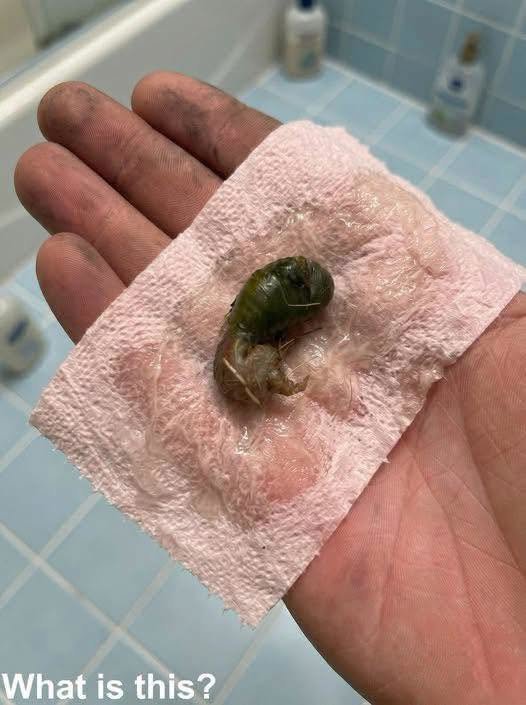
That is exactly what happened to a homeowner who discovered a strange, greenish-brown creature on a tissue in the bathroom. After picking it up carefully, the family tried to work out what they were looking at. Its unusual shape and shiny appearance made identification difficult.
So, what could it be, and should you be worried if you discover something similar in your home?
What Could This Creature Be?
Based on its appearance, one possibility is a small slug or another soft-bodied invertebrate. However, the photograph alone is not enough to identify the creature with certainty.
Several small organisms can be mistaken for one another, particularly when they are curled up, damaged, or photographed from an unusual angle.
Here are a few possibilities worth considering.
1. A Small Slug
Slugs are soft-bodied animals without an obvious external shell. They often have moist, shiny skin and can appear brown, gray, greenish, or nearly black.
They prefer damp environments and may occasionally enter homes through gaps around doors, windows, pipes, or other openings. Bathrooms can provide suitable conditions because of their moisture and limited light.
A slug may curl or contract when disturbed, making its shape look quite different from what you would expect.
2. A Small Worm or Leech-Like Animal
Some worms and other soft-bodied organisms can resemble slugs at first glance. Their shape, movement, body texture, and the presence or absence of visible segments can help distinguish them.
A true leech generally has recognizable suckers and a different body structure from a slug. However, those features may not be clear in a photograph.
It is best not to assume that an unfamiliar creature is a parasite simply because it looks unusual.
3. An Insect Larva
Certain insect larvae have smooth, rounded, or curved bodies and can appear unusual when they are not moving.
The location where the creature was found can offer useful clues. Larvae associated with drains, for example, are generally different in appearance from larger, fleshy animals found crawling in from outdoors.
Its exact size, movement, and body features would help narrow down the possibilities.
Why Would Something Like This Appear in a Bathroom?
Bathrooms are often among the dampest areas in a house. Moisture, standing water, organic debris, and small openings can attract or provide shelter for various tiny organisms.
Possible entry points include:
Gaps around plumbing and water pipes.
Open doors and windows.
Cracks near floors, walls, or exterior entrances.
Damp areas around sinks, showers, and bathtubs.
Nearby gardens, soil, and outdoor vegetation.
Finding one creature does not automatically mean your bathroom is dirty or that you have an infestation. Sometimes an individual animal simply wanders indoors.
However, repeatedly finding similar creatures may be a reason to inspect the bathroom for excess moisture, damaged seals, or other possible entry points.
Is It Dangerous?
The answer depends on what the creature actually is.
Many small slugs and other common household invertebrates pose little direct danger to people. Nevertheless, an unidentified animal should not be handled with bare hands.
Avoid touching it directly, keep children and pets away, and wash your hands thoroughly after cleaning the area. If the creature may be a parasite or an unfamiliar potentially harmful species, seek help from a qualified pest-control professional or local identification service.
If you find several similar creatures, take clear photographs before removing them. These images may help an expert identify the species.
What Should You Do If You Find One?
If you discover a strange creature in your bathroom, there is no need to panic. A few simple steps can help you handle the situation safely.
Step 1: Avoid direct contact. Use gloves or an appropriate tool rather than picking it up with your bare hands.
Step 2: Take a photograph. Capture the creature from above and, if safe, from the side. Include an object of known size nearby to show its approximate dimensions.
Step 3: Remove it safely. If it appears to be an ordinary small household invertebrate, use a suitable container and follow local guidance for removal. Avoid crushing it or applying chemicals before identification.
Step 4: Clean the area. Clean the surface with an appropriate household cleaner and wash your hands afterward.
Step 5: Check for moisture. Look for leaks, standing water, damaged seals, or gaps around plumbing that might allow small organisms to enter.
If unusual creatures continue appearing, consider arranging a professional inspection.
How Can You Prevent Unwanted Bathroom Visitors?
Keeping the bathroom dry and addressing possible entry points can make the space less attractive to moisture-loving organisms.
Try these practical measures:
Use an extractor fan or open a window when appropriate to improve ventilation.
Repair leaking taps and pipes promptly.
Dry persistently wet areas.
Clean around drains and remove accumulated debris.
Seal suitable gaps around pipes and exterior openings.
Check door seals and window screens for damage.
These steps can help reduce conditions that attract certain household pests, although they will not prevent every species from entering.
Frequently Asked Questions
Can a slug really enter a bathroom?
Yes. Slugs can sometimes enter homes through gaps, doors, windows, or other openings, particularly when conditions outside are damp.
Does finding a strange creature mean the bathroom is dirty?
Not necessarily. Moisture and access from outdoors can explain why some organisms appear indoors, even in a regularly cleaned home.
Can you identify this creature from a photograph?
A photograph can provide useful clues, but identification may require additional details, including its size, location, movement, and body structure. The creature shown here cannot be conclusively identified from the available image alone.
Should I be worried if I find another one?
One unexplained discovery is not necessarily a cause for concern. If you repeatedly find similar creatures, inspect for moisture and entry points and seek professional identification if needed.
Final Thoughts
Finding an unfamiliar creature in your bathroom can certainly be surprising, especially when it has an unusual shape or appearance. But the best response is to remain calm, avoid direct contact, and gather enough information to identify it correctly.
The creature in this photograph may resemble a small slug or another soft-bodied organism, but a definite identification would require a closer examination.
Now we would love to hear from you: Have you ever found a strange creature in your bathroom or near your bed? What did it look like, and did you discover what it was? Share your experience in the comments. Your observations might help someone else solve a similar mystery.