What Do Lines on Your Fingernails Mean? The Nail Changes You Should Know About
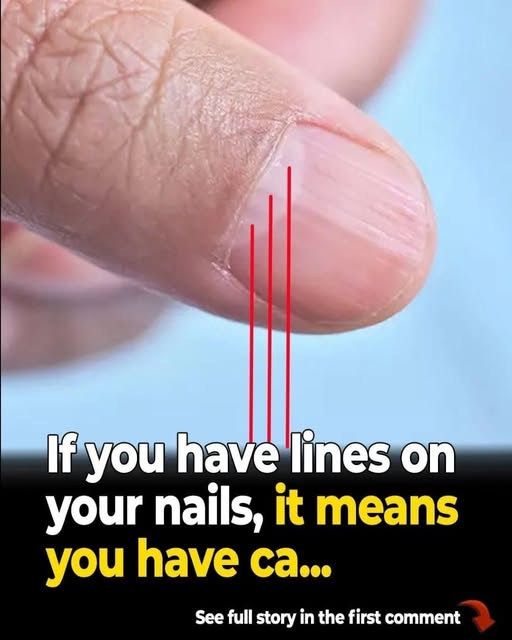
Have you noticed thin lines running along your fingernails? Many people become concerned when their nails develop ridges, grooves, or changes in color, especially as they get older.
Your fingernails can sometimes provide clues about your health, but not every change signals a serious illness. In fact, vertical ridges are common and often become more noticeable with age. They do not, by themselves, reveal your life expectancy or prove that you have cancer. <Cite refs={["turn192297search2","turn192297search4"]}/>
Understanding the type of line, its appearance, and whether it is accompanied by other symptoms can help you decide when to seek medical advice.
1. Vertical Nail Ridges: Often a Normal Part of Aging
Vertical ridges run from the cuticle at the base of the nail toward its tip. They may look like fine raised lines or shallow grooves.
These ridges are common, particularly in older adults, and are often harmless. Changes in nail growth and dryness can make them more noticeable over time. <Cite refs={["turn192297search2","turn192297search13"]}/>
What can you do?
Keep your nails clean and trimmed.
Apply moisturizer to your nails and surrounding skin.
Wear gloves when using household cleaning products.
Avoid excessive buffing, which can thin the nail.
If the ridges appear suddenly, become pronounced, or occur alongside other changes, ask a healthcare professional for an assessment.
2. Horizontal Lines: When Nail Growth Is Interrupted
Horizontal grooves that cross the nail are sometimes called Beau's lines. They can develop when normal nail growth is temporarily interrupted.
Possible causes include a significant illness, high fever, injury to the nail, certain treatments, or other medical conditions. The appearance of the groove may reflect an event that occurred weeks or months earlier, depending on nail growth. <Cite refs={["turn192297search4","turn192297search9"]}/>
A single groove does not automatically mean something serious is wrong. However, repeated or unexplained horizontal grooves should be discussed with a healthcare professional.
3. Dark Lines Under the Nail: A Change Worth Checking
A new brown or black line beneath a fingernail or toenail deserves particular attention, especially if it is widening, changing color, or becoming irregular.
Some dark nail lines have harmless explanations, including pigmentation or previous injury. However, a rare form of skin cancer called nail melanoma can also appear as a dark band under or around a nail.
The American Academy of Dermatology recommends having a new or changing dark streak examined by a dermatologist. Do not assume it is simply a bruise or a harmless mark. <Cite refs={["turn192297search1","turn192297search5"]}/>
4. Brittle or Splitting Nails: Possible Causes
Nails that break easily, peel, or split can be affected by everyday wear and tear, frequent exposure to water, cleaning products, or repeated manicures.
Sometimes, nail changes are associated with skin conditions, nutritional deficiencies, or other medical problems.
If your nails become persistently brittle or their appearance changes significantly, a healthcare professional can help identify the cause. Do not begin high-dose vitamin or mineral supplements without checking whether you actually need them.
5. Can Nail Lines Reveal Vitamin Deficiency?
Some nutritional deficiencies can affect the appearance of nails. For example, iron deficiency may be associated with brittle or spoon-shaped nails, while certain other deficiencies can contribute to changes in nail growth.
However, vertical ridges alone are not a reliable way to diagnose a vitamin or mineral deficiency. Their presence does not mean you automatically need supplements. <Cite refs={["turn192297search4","turn192297search9"]}/>
If you also have persistent fatigue, weakness, unusual paleness, or other unexplained symptoms, speak with a healthcare professional about whether testing is appropriate.
6. What About Nail Changes and Life Expectancy?
Social media posts sometimes claim that particular nail lines can predict how long a person will live. There is no reliable scientific basis for using ordinary vertical nail ridges to estimate life expectancy.
Certain nail changes can be associated with medical conditions, but a nail's appearance alone cannot establish a diagnosis or predict an individual's future health.
The most useful approach is to look at changes in context: when they started, whether they affect one or several nails, and whether other symptoms are present.
When Should You See a Doctor?
Consider arranging a medical assessment if you notice:
A new or changing dark streak under a nail.
Deep horizontal grooves that appear repeatedly.
Nail discoloration that does not grow out.
Nails that lift away from the nail bed.
Persistent pain, swelling, or redness around a nail