What Happens When You Sleep on Your Right Side? What Your Sleeping Position May Mean for Your Health
Have you ever wondered whether the side you sleep on can affect your digestion? Many people choose their sleeping position based on comfort, but research suggests that body position can influence certain health conditions, particularly acid reflux.
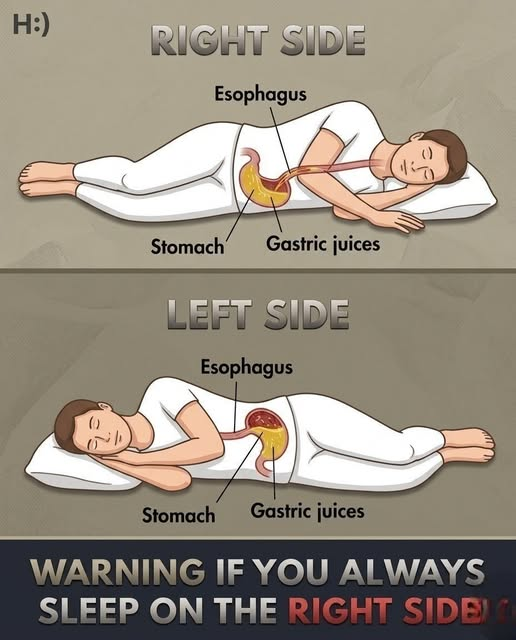
Sleeping on your right side is not inherently dangerous, and millions of people sleep this way without problems. However, for people who experience heartburn or acid reflux at night, changing to the left side may help reduce symptoms.
So, what actually happens when you sleep on your right side, and when might another position be more comfortable?
1. Sleeping on Your Right Side May Worsen Acid Reflux
Acid reflux occurs when stomach contents flow backward into the esophagus, the tube connecting your mouth to your stomach. This can cause heartburn, a sour taste in your mouth, or a burning sensation in your chest.
The position of your stomach relative to the esophagus can influence how easily stomach contents flow backward.
Research suggests that lying on the right side can increase nighttime esophageal acid exposure and slow the clearance of acid from the esophagus compared with lying on the left side. This effect is particularly relevant for people who already experience gastroesophageal reflux disease (GERD). <Cite refs={["turn521859search0","turn521859search6"]}/>
What may help: If you frequently wake up with heartburn, try sleeping on your left side and see whether your symptoms improve.
Remember, sleeping on your right side does not mean you will develop acid reflux. Many people tolerate this position comfortably.
2. Why Sleeping on Your Left Side May Help Digestion
The stomach and esophagus have a particular anatomical relationship. When you lie on your left side, the stomach's position can make it more difficult for its contents to flow into the esophagus.
Studies have found that left-side sleeping is associated with less acid exposure and faster acid clearance in people experiencing nighttime reflux. <Cite refs={["turn521859search0","turn521859search10"]}/>
This may help reduce symptoms such as:
Heartburn after lying down.
A sour or bitter taste in the mouth.
Regurgitation of stomach contents.
Discomfort that interrupts sleep.
However, left-side sleeping is not a cure for every digestive condition. If you have persistent symptoms, you may need medical assessment and additional treatment.
3. Eating Late at Night Can Make Reflux Worse
Your sleeping position is only one factor that can influence nighttime heartburn.
Lying down soon after a meal can make reflux more likely because the stomach is still digesting food. Large meals may be especially uncomfortable for people who are prone to reflux.
The American College of Gastroenterology recommends avoiding meals within two to three hours of bedtime for people with GERD symptoms. <Cite refs={["turn521859search1"]}/>
Try these simple habits:
Eat dinner two to three hours before going to bed.
Avoid eating unusually large meals late at night.
Notice which foods trigger your symptoms.
Avoid lying down immediately after eating.
Consider raising the head of your bed if nighttime reflux continues.
These measures may be helpful alongside any treatment recommended by your healthcare professional.
4. Can Sleeping on Your Right Side Damage Your Stomach?
There is no good evidence that routinely sleeping on your right side damages a healthy stomach.
The main concern discussed in sleep-position research is that right-side sleeping may worsen reflux in susceptible people. It does not mean that stomach acid automatically causes harm every time you sleep in this position.
If you sleep comfortably on your right side and do not experience reflux symptoms, there is generally no reason to force yourself to change positions.
The most suitable sleeping position depends on your comfort, medical history, and individual needs.
5. Does Sleeping Position Affect Sleep Quality?
Yes, body position may influence sleep quality in some people, especially those whose symptoms become worse when lying down.
Nighttime acid reflux can interrupt sleep, cause discomfort, and make it harder to return to sleep after waking. Studies suggest that reducing nighttime reflux through positioning may improve symptoms for some people with GERD. <Cite refs={["turn521859search7","turn521859search10"]}/>
However, sleeping position is only one part of good sleep health.
A comfortable mattress, a regular sleep schedule, an appropriate bedroom temperature, and treatment of underlying sleep problems can also make a difference.
6. When Should You See a Doctor About Acid Reflux?
Occasional heartburn is common, but repeated symptoms may indicate GERD or another condition that needs treatment.
Speak with a healthcare professional if you regularly experience:
Heartburn several times a week.
Persistent nighttime reflux.
Difficulty swallowing.
Ongoing nausea or unexplained vomiting.
Unintentional weight loss.
Symptoms that continue despite lifestyle changes.
Seek emergency medical attention for chest pain accompanied by shortness of breath, sweating, faintness, or pain spreading to the arm, back, neck, or jaw. Do not assume that severe chest pain is simply acid reflux.
Frequently Asked Questions
Is it bad to sleep on your right side every night?
Not necessarily. Right-side sleeping is comfortable for many people and is not generally considered dangerous. However, people with nighttime acid reflux may experience fewer symptoms when sleeping on their left side.
Which side is best for acid reflux?
Research generally favors the left side for reducing nighttime acid exposure. Elevating the upper body and avoiding meals shortly before bedtime may also help.
Can sleeping on the left side prevent heartburn completely?
No. Left-side sleeping may reduce reflux, but it cannot guarantee that symptoms will disappear. Persistent heartburn may require medical evaluation and treatment.
Should everyone change to left-side sleeping?
No. If your current position is comfortable and does not cause symptoms, there is usually no need to change it solely because of online health claims.
Does sleeping on the right side affect the heart?
Right-side sleeping is not generally harmful to the heart in healthy people. People with specific heart or breathing conditions may receive individualized positioning advice from their healthcare professionals.
Final Thoughts
Your sleeping position can influence comfort and certain digestive symptoms, but it does not automatically determine your health.
For people who experience nighttime acid reflux, sleeping on the left side may help reduce exposure of the esophagus to stomach acid. Avoiding late meals and elevating the upper body may provide additional relief.
If you sleep on your right side and feel comfortable, there is no reason to panic or assume that you are harming your body.
The key takeaway: Choose a comfortable sleeping position, pay attention to persistent symptoms, and remember that sleeping on your right side is not inherently dangerous.
Medical disclaimer: This article is for educational purposes only and does not replace professional medical advice, diagnosis, or treatment.