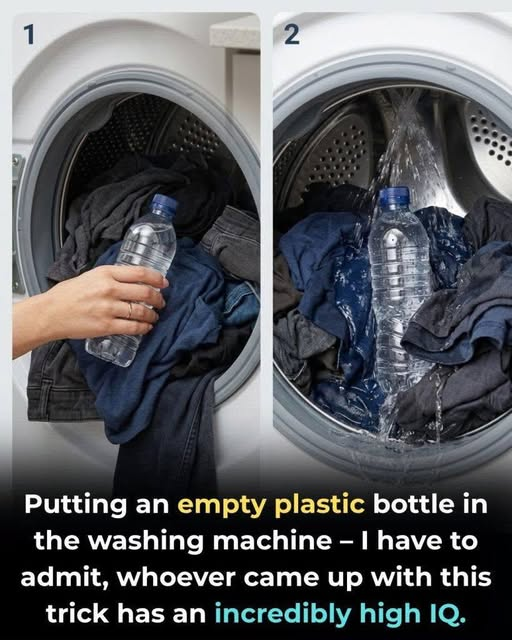
Put an Empty Plastic Bottle in the Washing Machine: The Simple Trick Most People Don’t Know
What if an ordinary plastic bottle could help make laundry day easier? A viral household tip suggests placing an empty plastic bottle inside the washing machine with your clothes. The idea has caught people's attention because it is simple, inexpensive, and uses something many households would otherwise throw away.
But what is this trick supposed to do? Can it really prevent clothes from tangling, and is it safe for every washing machine?
Before trying it yourself, here's what you should know about this unusual laundry hack.
Why Do People Put an Empty Plastic Bottle in the Washing Machine?
The idea behind this trick is that a bottle moves around with the laundry as the drum rotates. Some people believe this extra movement can help separate garments and prevent clothes from twisting tightly around one another.
For example, sheets, trousers, and large items of clothing can sometimes become tangled during a wash cycle. The bottle is supposed to act as a movable object that interrupts this process.
However, there is an important distinction between a trick that looks convincing in a video and a method proven to improve laundry results.
There is limited reliable evidence that an ordinary plastic bottle consistently prevents tangling, improves cleaning, or makes clothes come out softer. Results may vary depending on the washing machine, the load, and the types of fabric being washed.
Can a Plastic Bottle Help Prevent Tangled Clothes?
Some people may notice less tangling when they experiment with this method, but the effect is not guaranteed.
Clothes can become twisted for several reasons, including the shape of the garments, the amount of laundry in the drum, and the way the load moves during washing and spinning.
Fortunately, you can address many of these problems without adding an unfamiliar object to your machine.
Try these alternatives:
Avoid overloading the drum. Clothes need enough room to move freely.
Separate large items. Washing sheets and bulky towels separately from smaller garments can help reduce tangling.
Untangle clothes before washing. Separate sleeves, trouser legs, and twisted fabric before placing items in the drum.
Choose the appropriate cycle. Use a bedding, delicate, or other suitable cycle according to the garment labels and your machine's instructions.
Use mesh laundry bags when appropriate. These can help protect small or delicate items during washing.
These habits are more dependable than relying on a disposable bottle to improve the washing process.
Could This Trick Damage Your Washing Machine?
An ordinary plastic bottle is not designed to function as a washing-machine accessory. Although a lightweight bottle may appear harmless, adding an unapproved object introduces some uncertainty.
Depending on the bottle and machine, possible problems include:
Unusual noise: The bottle may repeatedly strike the drum or other objects in the load.
Plastic damage: The bottle may crack, become crushed, or develop rough edges.
Loose parts: A cap or label may come loose during washing.
Unexpected movement: The bottle may become trapped among garments rather than helping separate them.
Laundry damage: Broken plastic or loose components could potentially snag delicate fabrics.
These outcomes are not inevitable, but there is no good reason to assume that every bottle is safe in every washer.
Modern washing machines use specific drum movements and spin speeds to clean clothes and remove water. Adding a random object does not automatically improve those processes.
The safer approach is to check your washing machine's instruction manual and avoid placing objects inside the drum unless the manufacturer permits them.
Does the Bottle Make Clothes Cleaner or Softer?
There is no strong evidence that an ordinary empty plastic bottle makes clothes cleaner or softer.
Effective washing depends on several factors, including detergent, water temperature, fabric type, cycle selection, and how much room the clothes have to move.
Likewise, a bottle should not be expected to remove pet hair, eliminate odors, reduce detergent use, or shorten drying time reliably.
If your clothes are coming out dirty or smelling unpleasant, consider whether the load is too large, the detergent amount is appropriate, and the machine itself needs cleaning.
For persistent problems, consult the manufacturer's maintenance instructions rather than relying on viral laundry shortcuts.
What Is the Best Way to Reuse an Empty Plastic Bottle?
Reusing a bottle can be a sensible way to reduce waste, provided it is suitable for the intended purpose.
Instead of putting it inside your washing machine, consider these options:
Rinse and recycle it according to your local recycling rules.
Reuse an appropriate bottle for watering plants.
Use a clean container for a suitable household task, clearly labeling it when necessary.
Reduce disposable bottle use by choosing a reusable bottle designed for repeated use.
The best reuse method is one that provides a practical benefit without creating unnecessary risks.
A Better Laundry Routine for Everyday Results
If your goal is to make laundry easier, a few simple habits can make a noticeable difference.
Step 1: Sort Clothes Properly
Separate items according to color, fabric type, and care instructions. This helps protect garments and allows you to choose a suitable wash cycle.
Step 2: Load the Machine Correctly
Avoid packing clothes tightly into the drum. An overloaded washer may struggle to clean items thoroughly and can experience problems balancing the load during spinning.
Step 3: Use the Right Amount of Detergent
Follow the detergent label and your machine's recommendations. Using more detergent than necessary does not automatically make clothes cleaner and may leave residue.
Step 4: Select the Appropriate Cycle
Choose a cycle suitable for the fabrics and level of soiling. Delicate clothing, bedding, and heavily soiled garments may require different settings.
Step 5: Maintain Your Washing Machine
Clean the detergent drawer, door seal, and other components according to the manufacturer's instructions. Regular maintenance can help prevent odors and support proper machine performance.
Frequently Asked Questions
Does putting an empty plastic bottle in the washing machine really work?
Some people claim it helps prevent tangling, but reliable evidence of consistent benefits is limited. Its effect may vary, and it is not a substitute for loading clothes correctly.
Can I use this trick with towels and sheets?
It is better to wash large items according to your machine's instructions and avoid adding an unapproved bottle. Washing bulky bedding separately may help reduce tangling.
Can the bottle damage my clothes?
If a bottle cracks, develops rough edges, or loses parts, it could potentially snag fabrics or leave debris behind. Delicate garments are best protected by following their care labels and using appropriate laundry accessories.
Is it safe for front-loading washing machines?
Do not assume that it is safe for every front-loading or top-loading machine. Check the owner's manual before adding anything other than laundry and approved accessories.
What should I do if my washing machine shakes or makes unusual noises?
Stop the cycle if the machine is shaking violently or making severe impact noises. Follow the manufacturer's troubleshooting instructions and seek professional assistance if the problem continues.
Final Thoughts
The empty plastic bottle washing-machine trick is an interesting example of how simple household ideas spread online. While the concept of separating tangled clothes may sound reasonable, there is not enough reliable evidence to recommend an ordinary plastic bottle as a routine laundry tool.
You can often achieve better results by sorting garments, avoiding overloaded drums, choosing the correct cycle, and maintaining your washer properly.
Before trying a viral household hack, ask yourself one simple question: Is it proven to work, and does the manufacturer consider it safe?
Sometimes, the simplest solution is not adding another object to the washing machine—it is using the machine correctly.