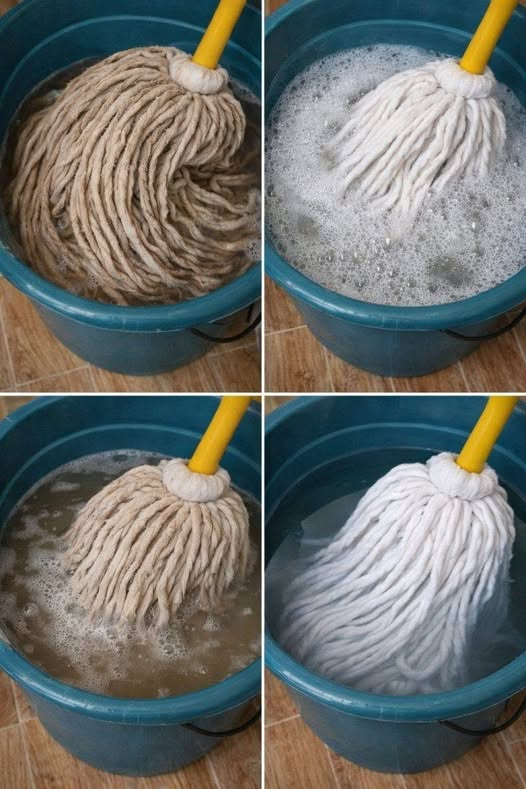
How to Clean a Very Dirty Mop and Make It Look Fresh Again
vA dirty mop can leave unpleasant odors, spread grime across the floor, and become less effective at cleaning. Over time, mop fibers collect grease, dust, soap residue, and bacteria, especially when the mop is put away while still damp.
The good news is that a heavily soiled mop may be easier to clean than you think. With warm water, a suitable detergent, and a little patience, you can often remove built-up dirt and refresh the mop fibers without buying a replacement.
What You Will Need
A bucket large enough to hold the mop head
Warm water
Laundry detergent or a suitable household cleaning detergent
A pair of rubber gloves
Clean water for rinsing
A well-ventilated place to dry the mop
Optional: Oxygen-based laundry bleach may be suitable for some washable mop heads, but check the manufacturer's instructions and product label first. Do not use it on materials that may be damaged by bleaching agents.
Step-by-Step Instructions
Step 1: Remove Loose Dirt
Take the mop outside or over a suitable drain and shake or rinse away loose dirt. Remove any visible debris from the fibers before soaking.
If the mop head is detachable, check whether the manufacturer allows it to be removed for washing.
Step 2: Prepare a Warm Detergent Solution
Fill a bucket with warm water, following the temperature guidance on the mop's care label.
Add the recommended amount of laundry detergent or an appropriate cleaning product. Stir the water gently so the detergent dissolves.
Avoid using excessively hot water, which can damage some synthetic fibers or loosen adhesives.
Step 3: Soak the Mop Head
Place the dirty mop head in the solution and allow it to soak for approximately 15–30 minutes, if permitted by the manufacturer's instructions.
The detergent helps loosen grime and oily residue trapped between the fibers.
For a particularly dirty mop, gently agitate the fibers in the water rather than pulling or twisting them aggressively.
Step 4: Wash the Fibers
Use gloved hands to move the mop head through the cleaning solution. If necessary, gently work the fibers against one another to loosen stubborn dirt.
Avoid forceful scrubbing that could fray the strands or damage the mop's attachment.
Step 5: Rinse Thoroughly
Drain the dirty water and rinse the mop head with clean water until the water runs relatively clear and little or no detergent remains.
Leftover detergent can attract dirt and leave residue on the floor, so rinsing is an important step.
Step 6: Disinfect When Appropriate
Cleaning removes visible dirt, but it does not necessarily eliminate all harmful microorganisms.
If disinfection is needed, use a product specifically labeled for the mop material and follow its directions for dilution and contact time. Never mix cleaning products, especially bleach with vinegar, ammonia, or other cleaners.
Step 7: Dry the Mop Completely
Wring out excess water according to the manufacturer's instructions and hang the mop in a well-ventilated area.
Spread the fibers apart so air can circulate freely. Allow the mop head to dry completely before storing it.
Keeping a mop damp in a closed bucket or cupboard can encourage unpleasant odors and microbial growth.
Helpful Tips for Keeping Your Mop Clean
Rinse the mop after every cleaning session.
Wash detachable mop heads according to their care labels.
Avoid storing a wet mop in a sealed bucket.
Replace mop heads that remain smelly after proper washing, have damaged fibers, or no longer clean effectively.
Use separate cleaning equipment for different areas when appropriate.
Frequently Asked Questions
Can I use vinegar to clean a dirty mop?
Vinegar may help with some mineral deposits and odors, but it is not a reliable disinfectant for every situation. A suitable detergent is a better starting point for ordinary dirt. Never mix vinegar with bleach or other cleaning products.
Can I use bleach to make a mop white again?
Only if the mop's care instructions and the bleach product label permit it. Bleach can damage or discolor certain fibers, so it should not be used automatically on every mop.
How often should I wash my mop?
Rinse it after every use and wash it whenever it becomes visibly dirty or develops an odor. The exact frequency depends on how often it is used and the type of flooring being cleaned.
When should I replace a mop?
Consider replacing it if the fibers are badly worn, the mop remains unpleasantly smelly after proper cleaning, or it no longer removes dirt effectively.
Final Thoughts
A dirty mop does not always need to be thrown away. Warm water, an appropriate detergent, thorough rinsing, and complete drying can help restore a mop that has accumulated everyday grime.
The most important habit is to clean the mop after use and let it dry properly. This helps it stay fresher and ready for the next cleaning session.
Cleaning note: The photograph does not identify the ingredient used or establish that a particular mixture produced the result. This article therefore recommends a practical detergent-based method rather than an unverified cleaning hack.