Remember This: What Happens If You Always Sleep on Your Right Side?
Have you ever wondered whether your sleeping position could affect your digestion? Many people naturally prefer sleeping on their right side, while others find it more comfortable to sleep on their left. Although both positions can be comfortable, research suggests that one may be better for people who experience acid reflux at night.
The good news is that sleeping on your right side is not automatically dangerous. However, if you frequently wake up with heartburn, a sour taste in your mouth, or a burning sensation in your chest, changing your sleeping position may help.
Let's explore how right-side and left-side sleeping affect digestion, what research tells us, and which habits may help you enjoy a more comfortable night's sleep.
1. Sleeping on Your Right Side May Worsen Acid Reflux
Acid reflux occurs when stomach contents flow backward into the esophagus, the tube that carries food from your mouth to your stomach.
This can cause heartburn, an unpleasant taste in the mouth, and discomfort in the chest or throat.
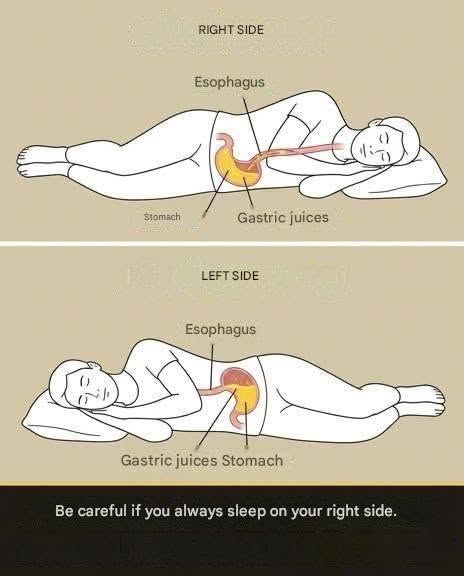
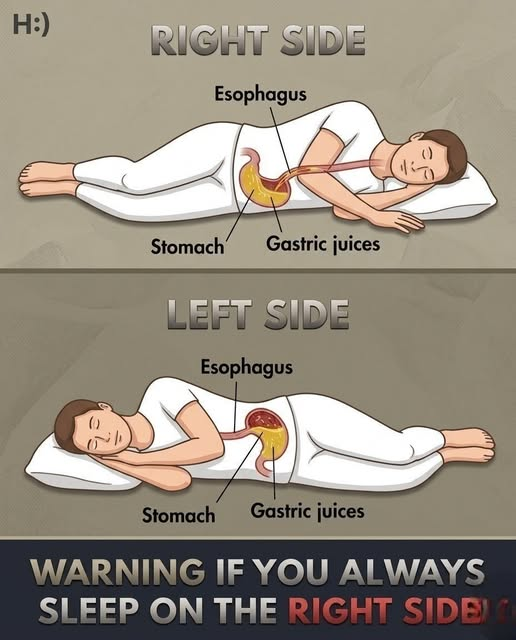
When you lie on your right side, the position of the stomach and the connection between the stomach and esophagus may make it easier for stomach contents to move upward. Research in people with gastroesophageal reflux disease (GERD) has found that right-side sleeping can be associated with greater acid exposure in the esophagus than left-side sleeping. <Cite refs={["turn538255search1","turn538255search3"]}/>
This does not mean everyone who sleeps on the right side will develop reflux. The effect is particularly relevant to people who already experience nighttime heartburn.
2. Left-Side Sleeping May Help Reduce Nighttime Heartburn
For people who experience acid reflux, sleeping on the left side may help keep stomach contents away from the opening of the esophagus.
A systematic review of available studies found that left-side sleeping may reduce nighttime acid exposure and improve reflux-related symptoms compared with right-side sleeping. However, the amount of benefit varies, and more research is still needed. <Cite refs={["turn538255search0","turn538255search2"]}/>
If you regularly experience heartburn after going to bed, try sleeping on your left side and notice whether your symptoms improve.
3. Your Sleeping Position Can Affect How Long Acid Stays in the Esophagus
The esophagus normally helps clear refluxed material back toward the stomach.
Studies measuring esophageal acidity have found that acid clearance can be faster when people with reflux sleep on their left side rather than their right. This may help explain why left-side sleeping can be beneficial for some people with nighttime reflux. <Cite refs={["turn538255search1","turn538255search4"]}/>
However, sleeping position is only one factor. The size and timing of meals, individual anatomy, and underlying digestive conditions can also influence symptoms.
4. Eating Before Bed May Make Reflux Worse
Your bedtime routine may matter as much as your preferred sleeping position.
Going to bed soon after a large meal can make nighttime reflux more likely, particularly for people who already have GERD.
To help reduce symptoms:
Finish your evening meal at least three hours before lying down.
Avoid eating unusually large meals late at night.
Identify foods and drinks that consistently trigger your symptoms.
Avoid lying flat immediately after eating.
These changes may help reduce nighttime discomfort, especially when combined with left-side sleeping. <Cite refs={["turn538255search3","turn538255search10"]}/>
5. Raising the Head of Your Bed May Also Help
If heartburn regularly wakes you up, elevating the upper part of your body may be useful.
A wedge pillow or a properly elevated head end of the bed can help reduce nighttime reflux for some people. Simply piling up ordinary pillows may be less effective because it can bend the body at the waist rather than raising the upper torso.
Consider combining gentle upper-body elevation with left-side sleeping if nighttime reflux is a problem.
If your symptoms continue despite these changes, speak with a healthcare professional about appropriate treatment.
6. Is Sleeping on Your Right Side Bad for Your Heart?
No. There is no good evidence that sleeping on your right side is inherently harmful to the heart in otherwise healthy adults.
The illustration associated with this topic focuses on stomach acid and the esophagus, not damage to the heart. Sleeping position preferences can vary, and comfort is important.
People with certain medical conditions may receive individualized advice about sleeping positions, but the claim that everyone must avoid the right side is misleading.
7. What About People Who Do Not Have Acid Reflux?
If you sleep comfortably on your right side and rarely experience heartburn, there is generally no reason to force yourself to change positions solely because of a social media warning.
Your preferred position may depend on comfort, mobility, and individual health needs.
The potential advantage of left-side sleeping is most relevant to people who experience nighttime reflux, rather than everyone who goes to bed at night.
Signs That Your Nighttime Heartburn Needs Medical Attention
Occasional heartburn is common, but frequent or persistent symptoms may indicate GERD or another condition that needs assessment.
Speak with a healthcare professional if you regularly experience:
Heartburn several times a week.
Persistent difficulty swallowing.
Repeated nighttime coughing or choking.
Ongoing nausea or unexplained vomiting.
Unintentional weight loss.
Symptoms that do not improve with appropriate lifestyle changes.
Seek emergency medical care if you experience chest pain that is severe, new, or unexplained, especially when accompanied by shortness of breath, sweating, faintness, or pain spreading to your arm, back, or jaw. Do not assume that chest pain is simply heartburn.
Frequently Asked Questions
Is it better to sleep on the left or right side?
For people with nighttime acid reflux, left-side sleeping is generally more favorable because it may reduce acid exposure in the esophagus. For people without reflux, either side may be comfortable.
Can sleeping on the right side cause GERD?
Right-side sleeping may worsen nighttime reflux in people who are susceptible to it, but it does not mean that everyone who sleeps on that side will develop GERD.
How long after eating should I wait before sleeping?
If you experience nighttime reflux, try leaving at least three hours between your evening meal and lying down.
Can changing my sleeping position replace reflux medication?
Not necessarily. Sleeping on the left side and making lifestyle changes may help, but persistent GERD may require medical assessment and treatment.
Final Thoughts
Your sleeping position can influence digestion, particularly if you experience acid reflux during the night. Research suggests that sleeping on the left side may help reduce nighttime reflux compared with sleeping on the right.
Nevertheless, sleeping on your right side is not dangerous for everyone, and there is no reason to worry if you sleep comfortably without symptoms.
If heartburn regularly interrupts your sleep, consider trying the left-side position, avoiding late meals, and elevating your upper body. Persistent symptoms deserve medical attention so that you can identify the cause and find the most appropriate treatment.
Medical disclaimer: This article is for educational purposes only and does not replace professional medical advice, diagnosis, or treatment.